English

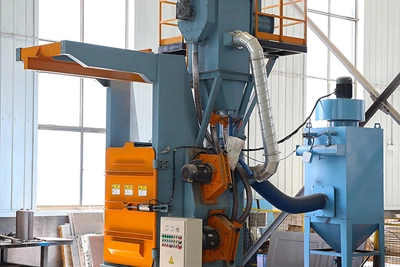
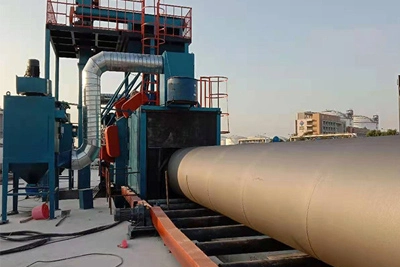
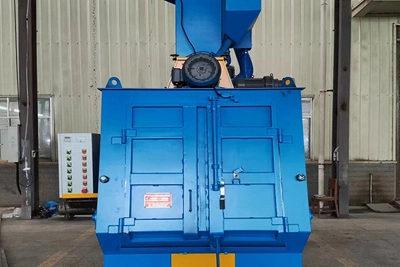
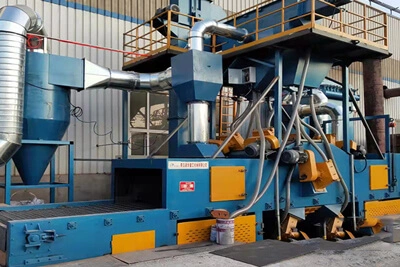
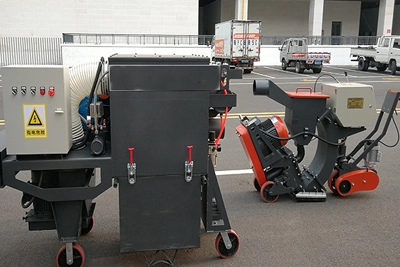

In the selection of shot blasting machines, roller conveyor type and hook type are two common equipment types. Their structural designs and working methods differ, and the applicable workpiece range and production scenarios also vary significantly. The following explains them from four aspects: equipment characteristics, applicable workpieces, common application areas, and selection recommendations.
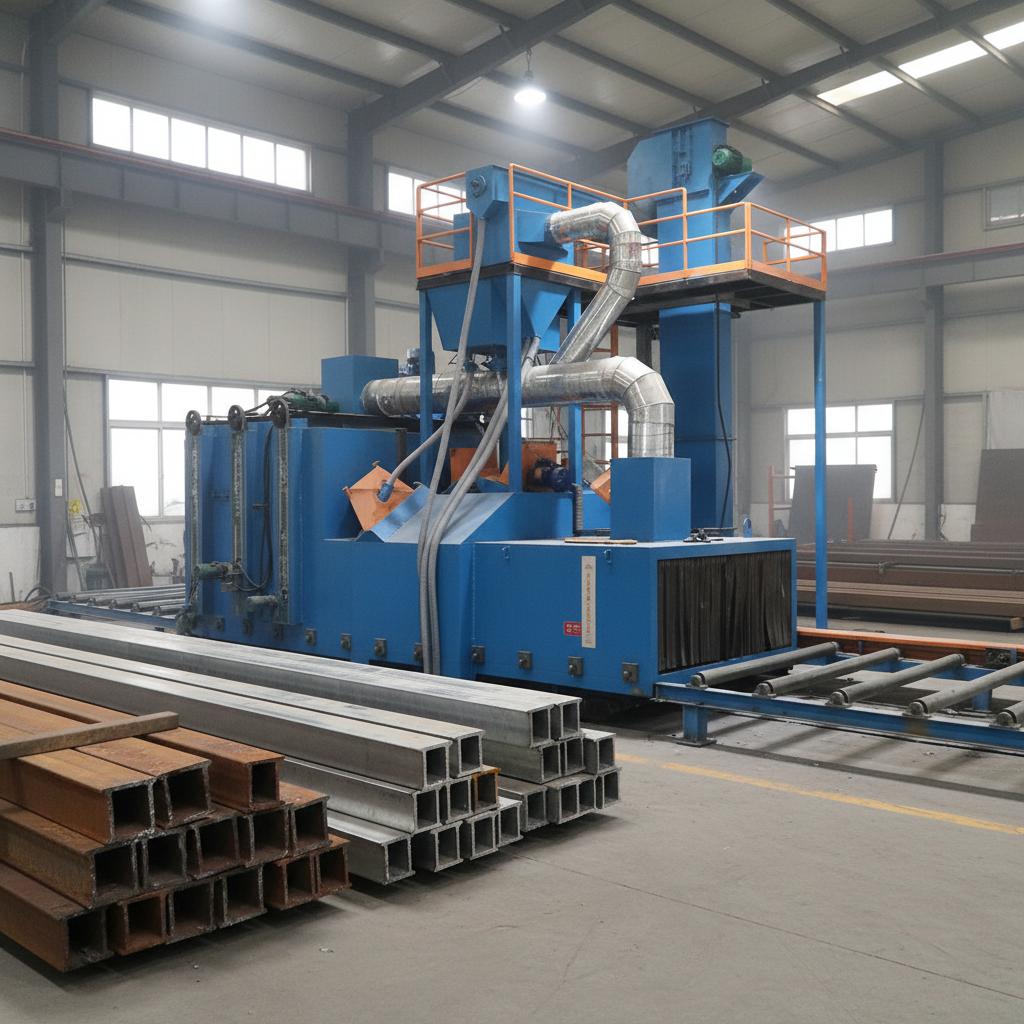
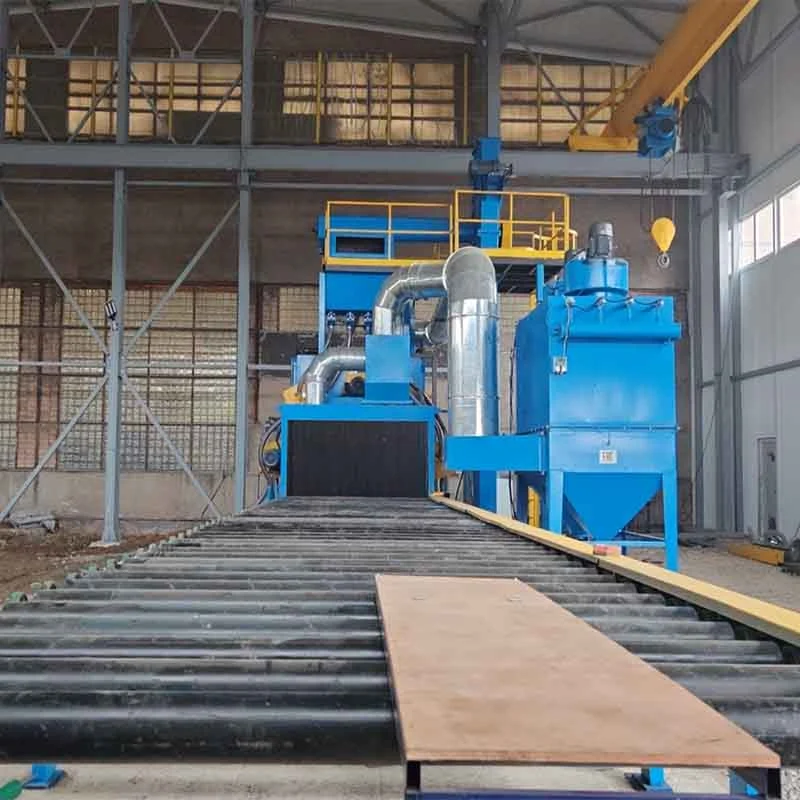
Equipment Characteristics: The workpiece is placed on the roller conveyor system and passes through the shot blasting cleaning zone at a constant speed. During the journey, shot blasters arranged at different positions continuously blast the workpiece surface. This equipment is suitable for integration with upstream and downstream processes to form a continuous production line.
Applicable Workpieces:
- Steel Plates: Medium and heavy plates, thin plates, checkered plates
- Section Steel: H-beams, I-beams, channel steel, angle steel
- Pipes: Round pipes, square pipes, rectangular pipes
- Welded Structural Components: Larger lengths, relatively regular shapes
This type of equipment has strong adaptability to workpiece length, but requires the workpiece cross-section to be able to pass through the shot blasting chamber's passage. Common Application Areas
- Pre-treatment of steel plates and profiles in steel structure processing enterprises
- Cleaning of plates and profiles in bridge manufacturing
- Surface treatment of steel plates in ship section manufacturing
- Supporting equipment for steel pipe anti-corrosion production lines
Advantages and Limitations
Advantages: High processing efficiency, suitable for large-scale continuous operation. Stable equipment operating parameters and good consistency in processing results. Can be directly connected to processes such as spraying and drying, reducing intermediate transfer links.
Limitations: Certain requirements apply to workpiece shape. Complex structural parts, workpieces with internal cavities or deep holes may have blind spots during roller conveyor transport. The equipment occupies a large area; some models require the construction of a pit.
Equipment Features
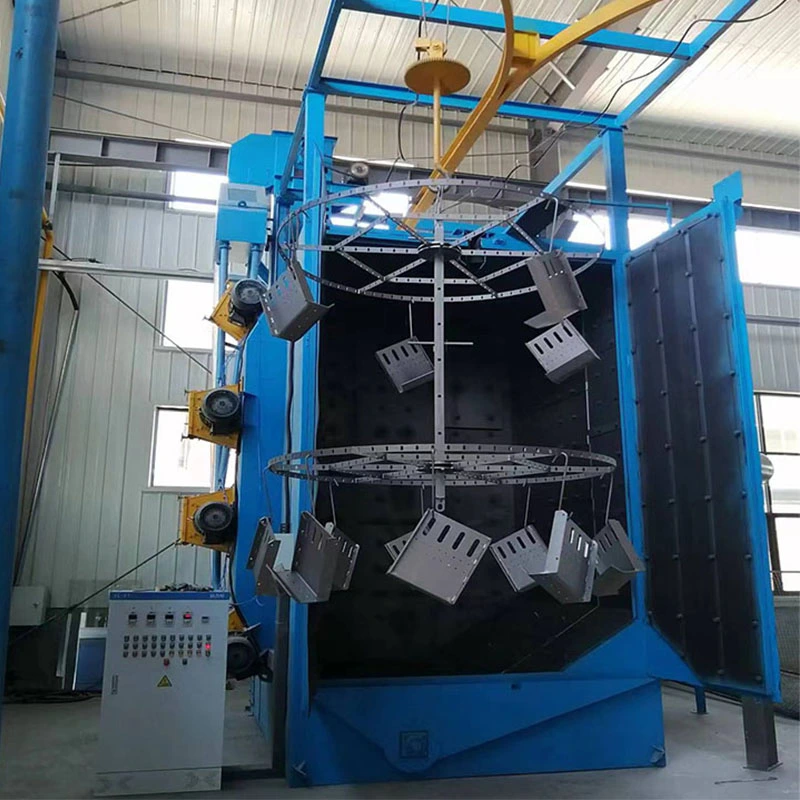
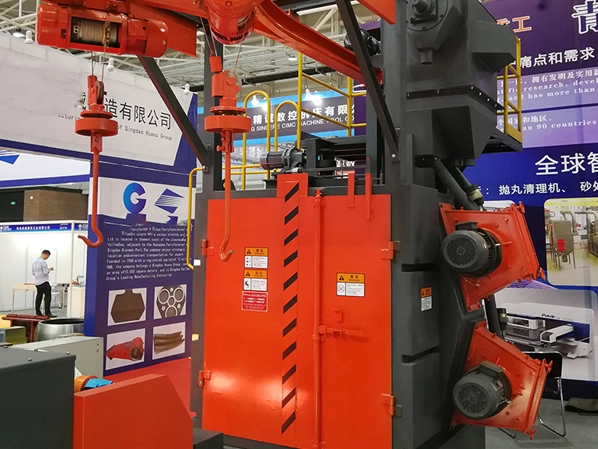
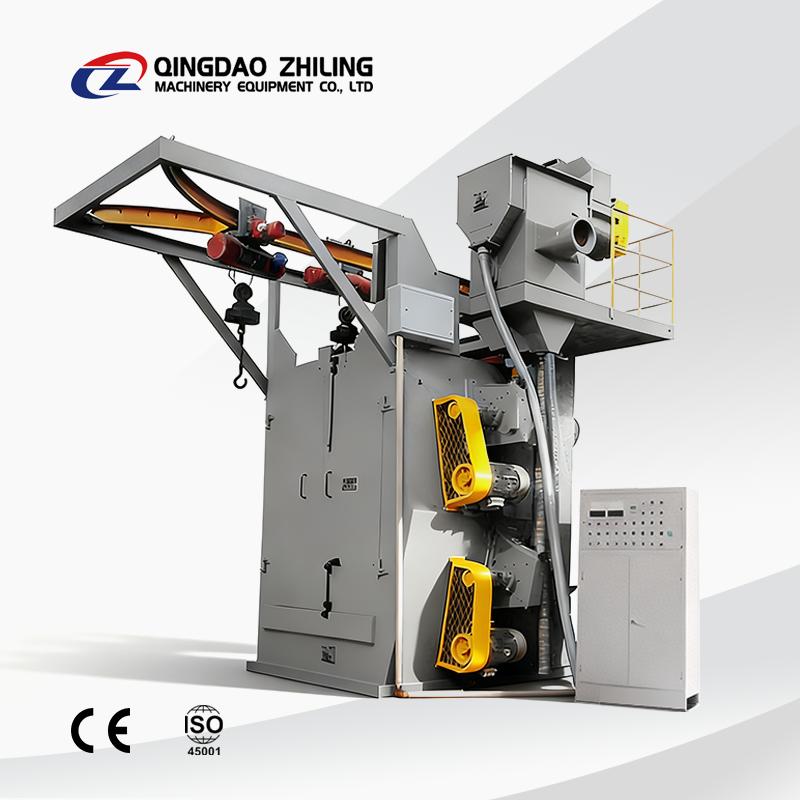
The workpiece is suspended by a hook and fed into the cleaning chamber, where it rotates at a uniform speed. The shot blaster projects the shot from multiple directions, exposing each surface to the blasting area sequentially during rotation. Single or double hook configurations can be selected according to production rhythm.
Applicable Workpieces
- Complex-shaped castings: engine blocks, gearbox housings, pump bodies, valve bodies
- Precision parts susceptible to impact: gears, crankshafts, connecting rods
- Large and medium-sized structural parts: welded frames, large castings
- Workpieces with significant single-piece weight
This type of equipment is highly adaptable to the shape and size of workpieces, especially suitable for processing workpieces with internal cavities, deep holes, or complex curved surfaces.
Common Application Areas
- Automotive parts manufacturing (engine parts, chassis parts)
- Construction machinery manufacturing (excavator parts, hydraulic parts)
- Foundry industry (casting surface cleaning)
- Equipment repair and remanufacturing companies
Advantages and Limitations
Advantages include independent suspension of workpieces, preventing contact and collision damage. The workpieces rotate continuously during cleaning, allowing for surface slinging, making it suitable for handling complex-shaped workpieces. The equipment structure is relatively compact, requiring less stringent factory floor conditions.
Limitations include limited batch processing capacity, longer loading and unloading times, and lower throughput per unit time compared to roller conveyor systems. This type of shot blasting machine requires the use of overhead cranes or hoisting equipment and has certain height requirements for the factory.
When choosing between roller conveyor or hook-type shot blasting machines, it is recommended to evaluate from the following three dimensions:
Workpiece Characteristics
- If the workpieces are mainly long plates, structural steel, and pipes, with regular shapes suitable for conveying, roller conveyor machines are preferred.
- If the workpieces have complex shapes, internal cavities or deep holes, or large single-piece weight, hook-type machines are preferred.
Production Scale
- For large-volume, single-variety production requiring continuous flow operations, roller conveyor machines are more efficient.
- For multi-variety, small-volume production with significant differences in workpiece size, hook-type machines offer greater flexibility.
Site Conditions
- If the factory has sufficient length to accommodate the conveyor line and supporting equipment, roller conveyor machines are suitable.
- If the factory has sufficient height and an overhead crane is already installed, hook-type machines are suitable.
Roller conveyor shot blasting machines and hook-type shot blasting machines have different design focuses and are applicable to significantly different scenarios. When selecting a model, the core basis should be the characteristics of the workpiece, combined with a comprehensive judgment based on production scale and site conditions. For users with complex workpiece types, samples can be provided for trial runs to verify the actual cleaning effect.