English

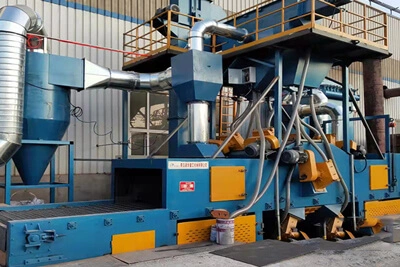
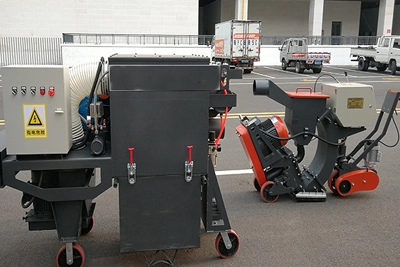

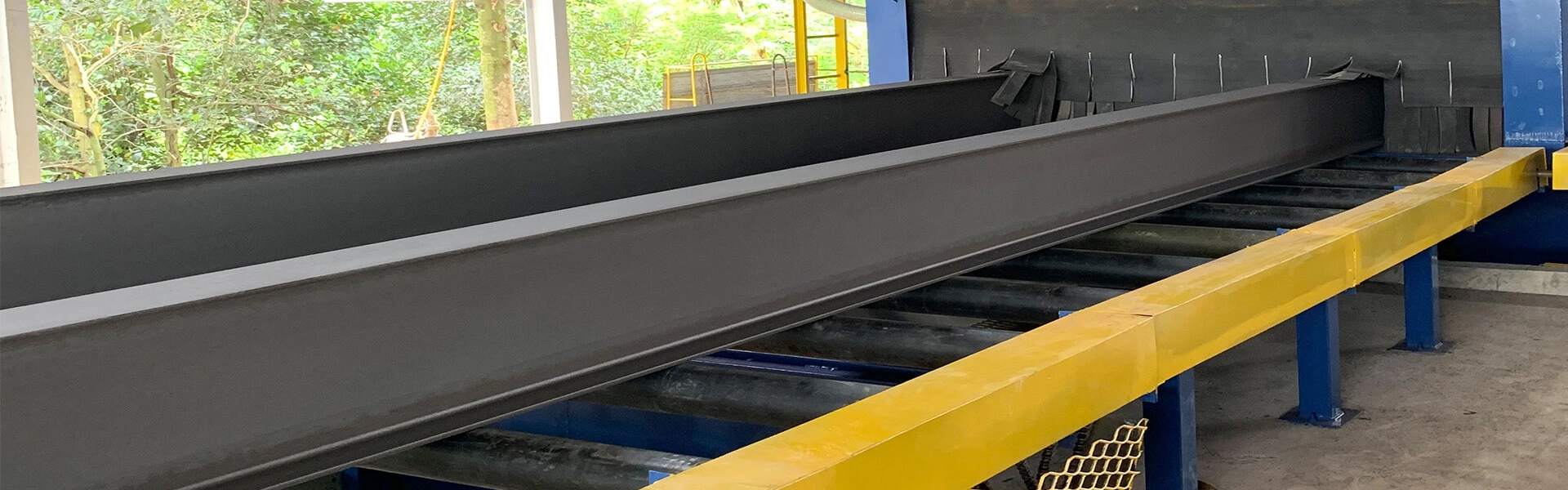
During the manufacturing, processing, and installation of steel structures, surfaces develop mill scale, rust, and welding residues. If these contaminants are not properly removed, they directly affect coating quality and corrosion protection life. Shot blasting is one of the most widely used surface preparation processes in the steel structure industry.
Steel structure components typically require anti-corrosion coating before leaving the factory. Whether for building steel structures, bridge components, or offshore equipment, coating quality directly depends on the cleanliness and roughness of the base material surface. Shot blasting addresses both requirements simultaneously: thoroughly removing surface contaminants while creating a uniform rough surface that provides an excellent adhesion base for coatings.
Removal of Mill Scale and Rust
The high-temperature mill scale formed during steel rolling has weak adhesion to the base material. Direct coating application can easily lead to peeling. Shot blasting uses high-speed abrasive impact to completely remove mill scale and rust layers.
Removal of Welding Residues
Welding slag and spatter generated during the welding process adhere around the weld area, affecting coating quality and appearance. Shot blasting effectively removes these residues.
Relief of Welding Stress
The impact of shot blasting creates compressive stress on the metal surface layer, helping to balance the tensile stress generated by welding and improving the fatigue resistance of components.
Creation of Uniform Roughness
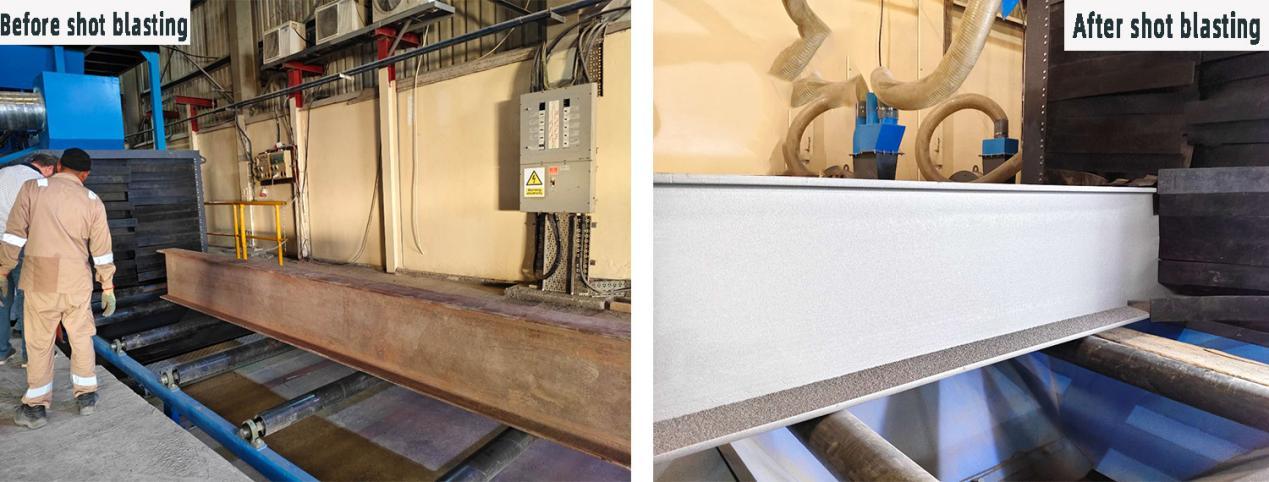
After shot blasting, the surface develops a uniform anchor pattern rough structure, increasing the contact area between coating and base material and significantly enhancing adhesion.
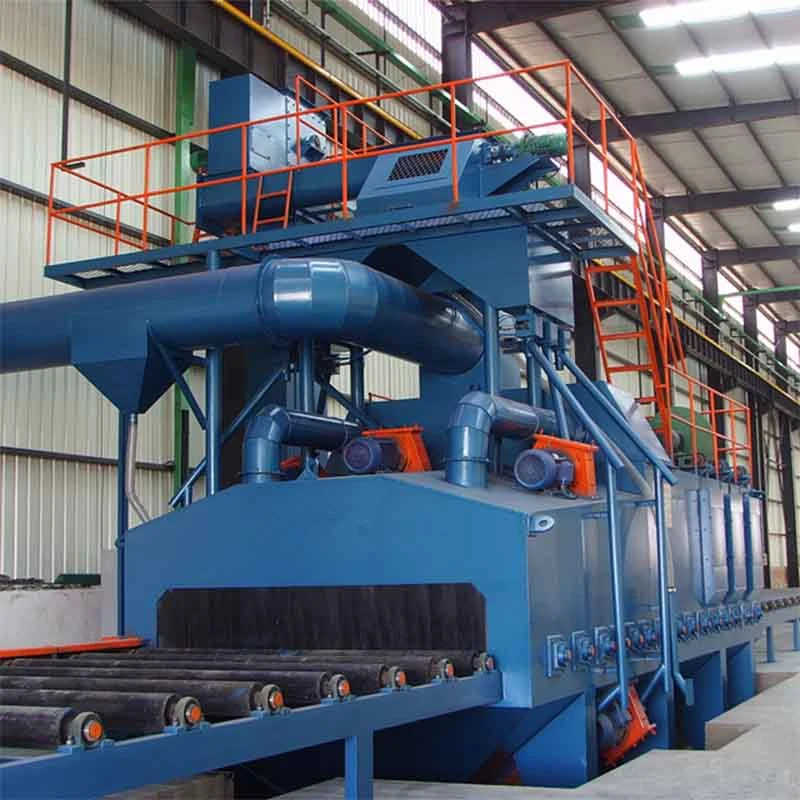
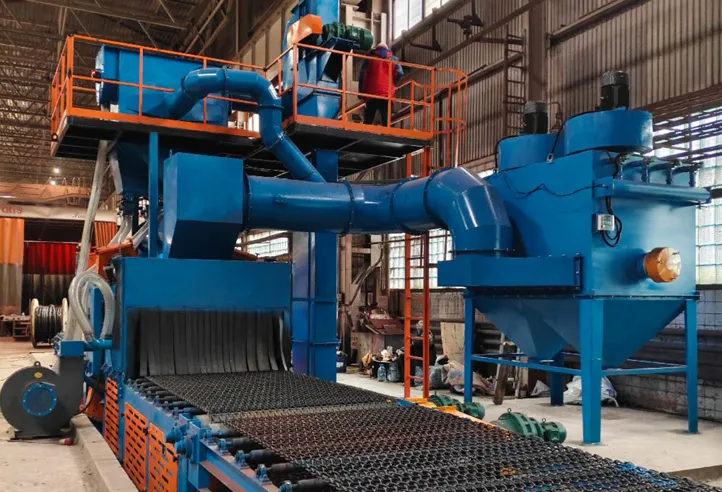
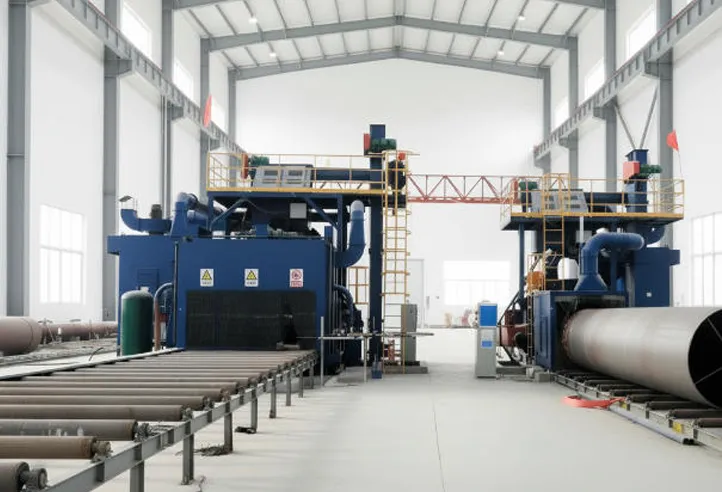
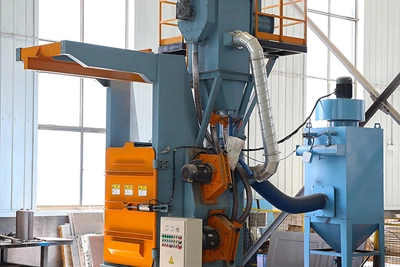
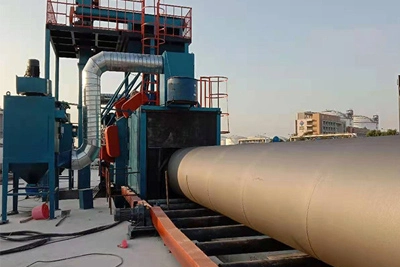
Roller Conveyor Shot Blasting Machine
This is the most commonly used equipment type in the steel structure industry. Workpieces are continuously conveyed by rollers at a constant speed through the blasting chamber, making it suitable for high-volume continuous production. Multiple blast wheels can be configured to provide comprehensive blasting of H beams and steel plates from different angles.
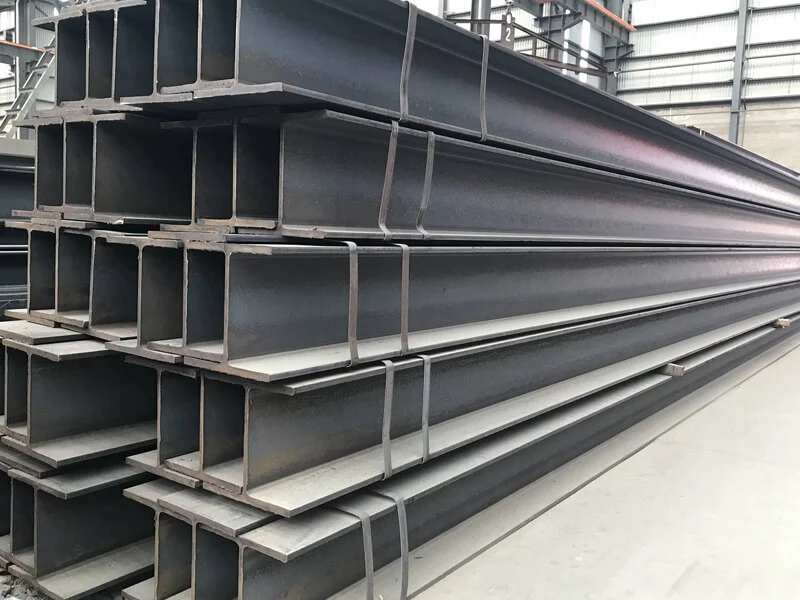
After shot blasting, steel structure components achieve a surface cleanliness of Sa2.5, displaying a uniform metallic luster. The surface roughness is moderate, meeting coating adhesion requirements without excessive paint consumption. The cleaned components can proceed directly to the painting process without secondary treatment.
Zhiling Machinery provides customized shot blasting solutions for the steel structure industry, designing equipment parameters based on workpiece specifications and production requirements. The equipment features wear-resistant liners, high-efficiency dust collection systems, and PLC intelligent control to ensure long-term stable operation. We have supplied equipment to numerous steel structure enterprises both domestically and internationally, earning customer recognition.
Different steel structure manufacturers often have varying production requirements depending on component size, production volume, and workshop layout.
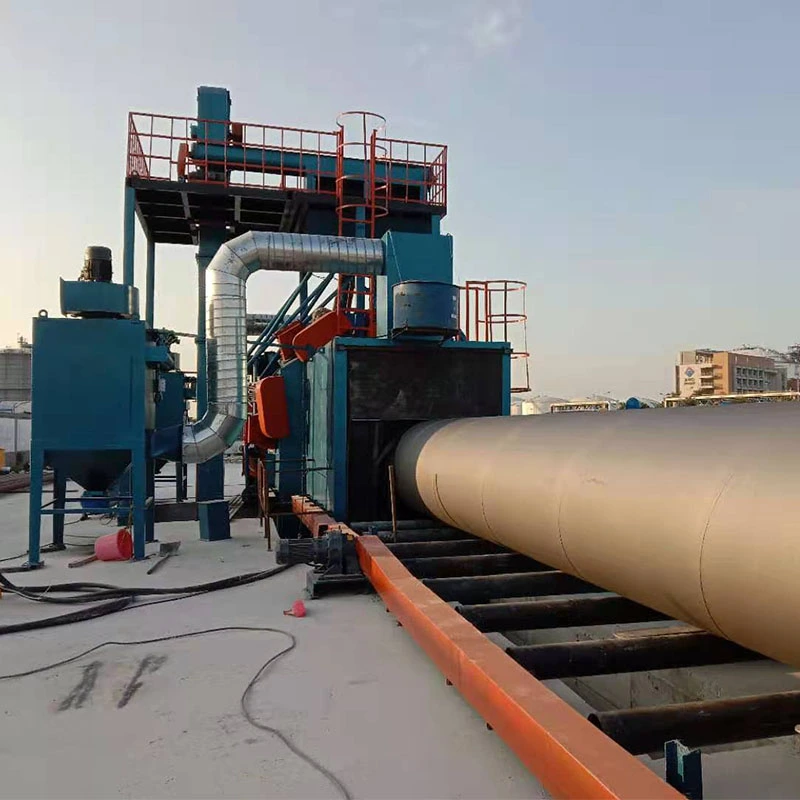
For manufacturers processing large welded steel structures, fabricated assemblies, and heavy steel components, a dedicated steel structure shot blasting machine can provide comprehensive cleaning performance while accommodating oversized workpieces and complex geometries.
When the primary products are H-beams, angle steel, channels, and other structural profiles, a profile steel shot blasting machine offers more targeted blasting coverage. Its chamber design and blast wheel arrangement are optimized to clean multiple surfaces of profile sections efficiently and consistently.
For production lines requiring continuous material flow and high throughput, such as steel fabrication centers and automated coating lines, a continuous shot blasting machine can be integrated with upstream and downstream equipment to achieve uninterrupted surface preparation and improve overall production efficiency.
The final equipment selection should be based on workpiece dimensions, daily production capacity, automation requirements, and available workshop space to ensure the most cost-effective solution.