English

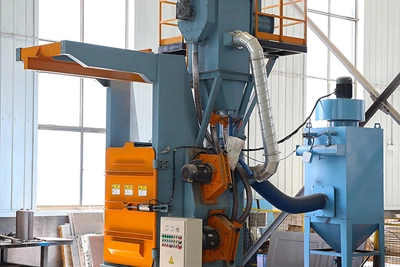
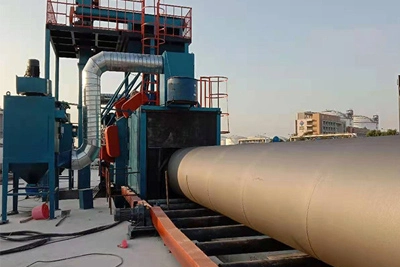
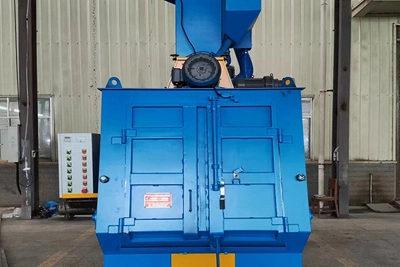
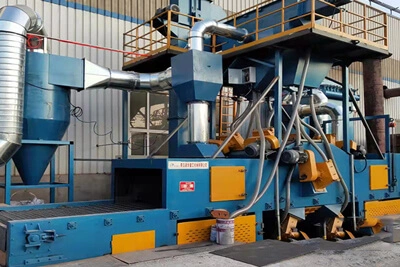
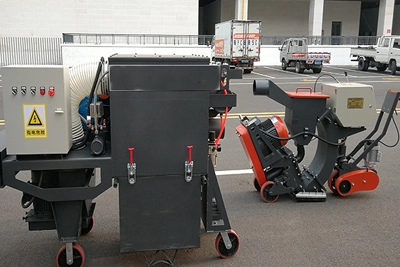

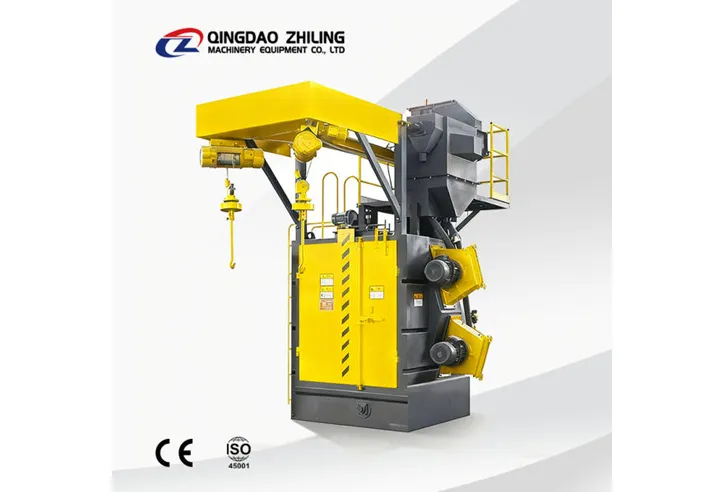
Before buying a Double Hook Shot Blasting Machine, you must verify workpiece size and weight, production rhythm, blasting power configuration, hook load balance, automation level, dust collection efficiency, and long-term operating cost. Ignoring any of these can lead to low efficiency, excessive wear, or poor surface quality after installation.
Below, I'll walk you through the key technical and commercial checkpoints that experienced buyers in foundries, fabrication shops, and coating lines always evaluate — based on real industry projects, not generic brochures.
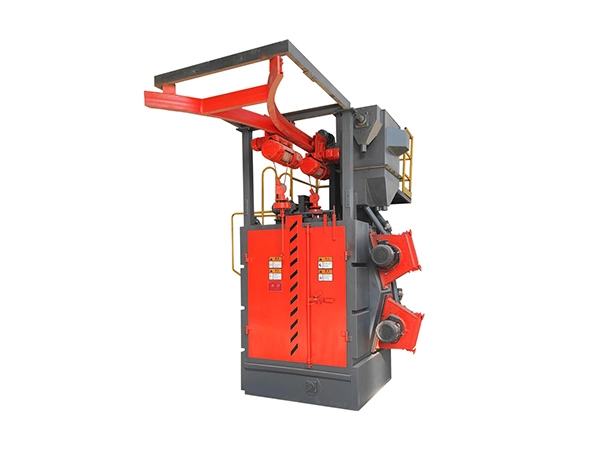
Direct answer:
A double hook system is ideal when loading/unloading time is longer than blasting time and production continuity matters.
Are you running medium to high batch volumes?
Do your operators lose time waiting for blasting cycles to finish?
Is surface treatment a bottleneck in your production line?
If yes, a Double Hook Shot Blasting Machine makes sense because one hook blasts while the other is being loaded, reducing idle time by 30–50% compared to a single hook system.
Industry tip:
If your daily output is below 1–2 batches per hour, a single hook may be more economical.
Direct answer:
Hook load capacity must be designed based on actual hanging weight, not theoretical maximums.
Maximum single-piece weight
Total hanging weight per hook
Dynamic load during rotation
Center of gravity of irregular parts
A common mistake is buying a machine rated for "2 tons" without considering:
Off-center hanging
Chain + fixture weight
Long-term fatigue on hook arms
Best practice:
Always specify working load ≤ 70% of rated hook capacity to avoid deformation and bearing failure.
Direct answer:
There is no fixed number — it depends on coverage area, material hardness, and required surface cleanliness.
Number of blast wheels (usually 4–8)
Wheel power (7.5 kW / 11 kW / 15 kW)
Shot throwing speed and angle
Overlapping coverage zones
For example:
Light weldments → fewer wheels, lower power
Heavy castings or forgings → more wheels with higher impact energy
Sales insight:
Overpowered machines waste energy and increase wear cost. Underpowered machines fail to meet surface standards (Sa2.5 / Sa3).
This is a core quality indicator of a Double Hook Shot Blasting Machine.
Independent rotation motor for each hook
Smooth start/stop (no jerking)
Synchronized rail movement
Anti-swing design during transfer
Poor hook stability leads to:
Uneven blasting
Shot rebound damage
Premature wear of liners and wheels
Ask the supplier:
Is the hook rotation speed adjustable based on part geometry?
Direct answer:
Not if the separator is properly designed.
Air wash separator efficiency
Ability to remove dust, broken shot, and scale
Stable shot flow to blast wheels
A low-quality separator causes:
High abrasive consumption
Reduced blasting intensity
Blockage in feed system
Industry benchmark:
Shot reuse rate should remain stable after 8–12 hours of continuous operation.
Double hook machines often operate nearly continuously, which puts higher demand on dust removal.
Dust collector airflow capacity (m³/h)
Filter type (cartridge preferred)
Automatic pulse cleaning
Emission compliance (local environmental standards)
Real-world issue:
Undersized dust collectors lead to:
Poor visibility in the chamber
Shot contamination
Environmental inspection failures
Direct answer:
Yes — and automation significantly improves consistency and safety.
PLC control system
Recipe-based blasting parameters
Fault alarms and maintenance reminders
Integration with overhead crane or conveyor
Automation reduces:
Operator dependency
Incorrect blasting time
Accidental overloads
Don't focus only on machine price.
Blast wheel wear parts
Liner replacement frequency
Energy consumption per hour
Steel shot consumption rate
Downtime for maintenance
Buyer advice:
A slightly higher upfront investment in a well-designed Double Hook Shot Blasting Machine often saves 20–30% in operating cost over 3–5 years.
Direct answer:
It should be — otherwise, efficiency will be compromised.
Customization may include:
Chamber size
Hook spacing and rail length
Blast wheel layout
Noise reduction design
Special workpiece fixtures
From a sales perspective:
Suppliers who ask detailed questions about your parts before quoting are usually more reliable than those offering "standard models only."
Before purchasing a Double Hook Shot Blasting Machine, don't ask "How much does it cost?" first. Ask:
Does it match my production rhythm?
Is it engineered for my actual workpieces?
Will it remain efficient after 2–3 years of operation?
A properly selected machine doesn't just clean parts — it improves throughput, reduces labor pressure, and stabilizes surface quality, which directly impacts downstream coating or painting performance.