English

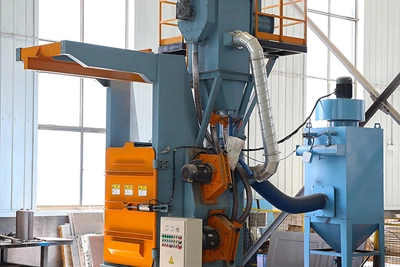
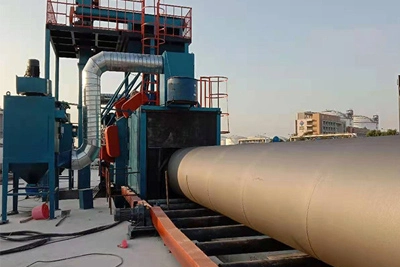
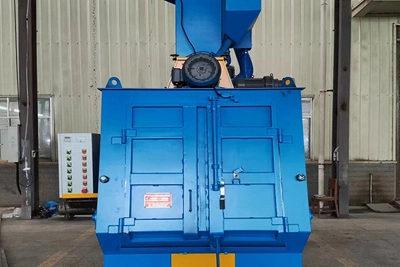
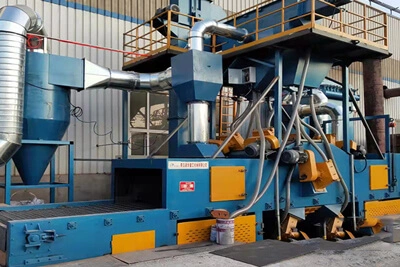
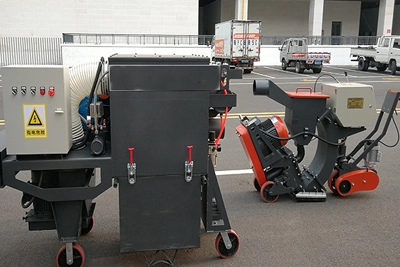

If your factory is processing structural steel or fabricating welded components, the H Beam Shot Blasting Machine is almost always a superior choice compared to manual sandblasting. It delivers higher consistency, lower long-term cost, and dramatically better surface preparation quality—especially for large steel profiles such as H-beams, I-beams, box beams, pipes, and plates.
However, manual sandblasting still has value in certain scenarios. Below is a deep, expert-level comparison based on real industry applications, global standards (ISO 8501, SSPC), and buyer concerns.
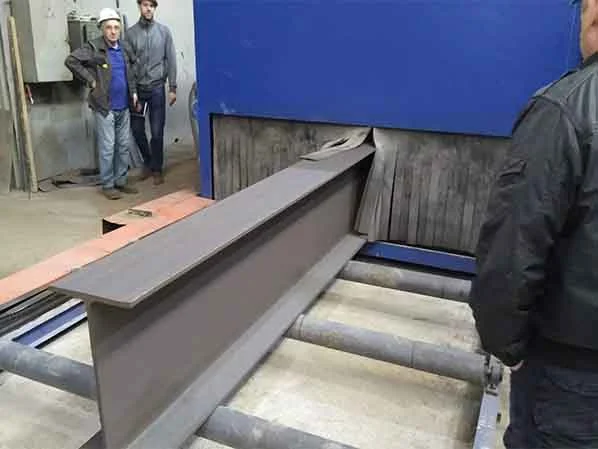
The main difference is mechanical vs. pneumatic cleaning:
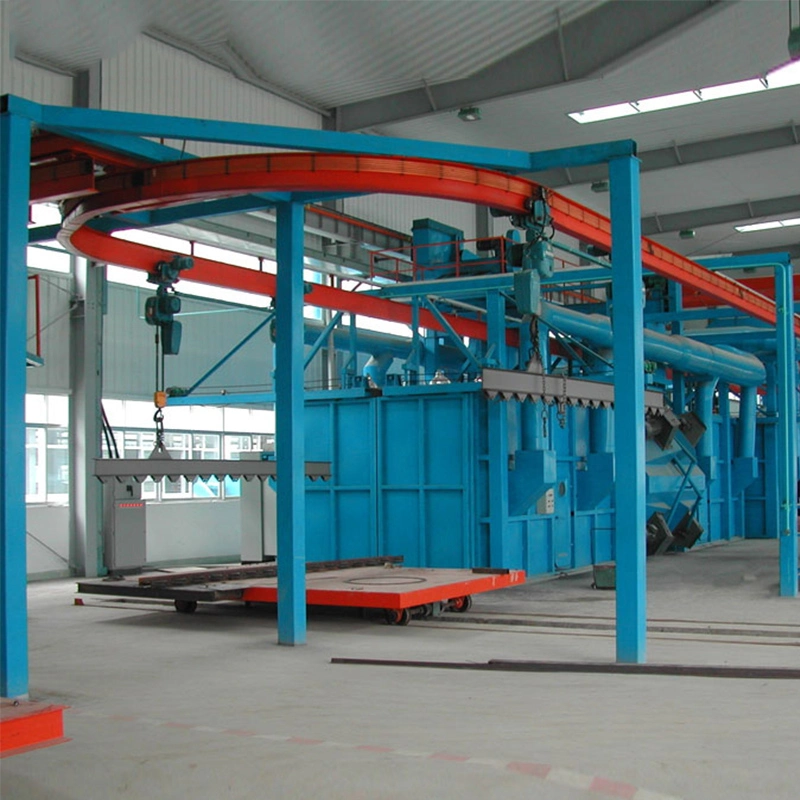
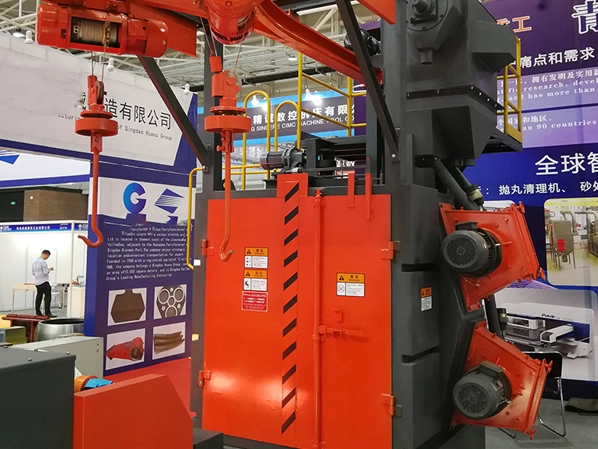
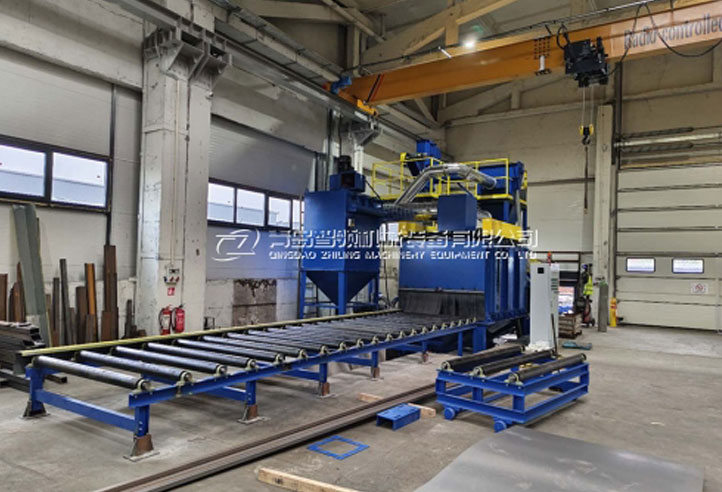
H Beam Shot Blasting Machine: Uses high-speed steel shot accelerated by turbines; suitable for mass production, stable quality, and continuous processing.
Manual Sandblasting: Uses compressed air to propel abrasive; suitable for small areas, irregular structures, or repair work.
For factories with daily steel processing tasks, a shot blasting line is far more efficient and cost-effective.
Handles 1–5 meters per minute depending on model.
Processes H-beams up to 2000 mm height, plates up to 3000 mm width.
Continuous conveyor feed allows assembly-line integration.
Workload equivalent to 20–30 workers doing manual blasting.
Productivity depends on operator skill.
Typical rate: 10–20 m²/hour.
Requires repeated pauses for abrasive refilling and compressor cooling.
Highly inefficient for mass production.
Conclusion: If your factory processes more than 50 tons of steel per day, manual sandblasting becomes a bottleneck. Shot blasting provides consistent throughput with predictable production planning.
This is one of the most common "People Also Ask" questions on Google:
“Does shot blasting give a better finish than sandblasting?”
Achieves Sa2.5 or Sa3 (ISO 8501-1), ideal for paint adhesion.
Produces uniform roughness of 40–75 μm.
Completely removes rust, scale, welding slag, and oxide layers.
Prevents coating failures caused by uneven surface preparation.
Quality varies by operator skill and fatigue.
Hard to achieve uniform roughness.
More likely to leave uncleaned or over-cleaned spots.
Inconsistent finish affects coating lifespan.
Conclusion: For steel structure factories seeking consistent coating adhesion, the shot blasting machine clearly outperforms manual methods.
Fully enclosed chamber prevents dust leakage.
Automatic abrasive recycling system.
Reduces labor to 1 operator for monitoring.
Lower injury risk (no direct exposure to abrasive).
High dust generation (silica hazard).
Requires full PPE: helmet, respirator, gloves, protective suit.
Worker fatigue increases accident probability.
Compliance with safety regulations (OSHA/CE) is challenging.
Conclusion: Shot blasting minimizes health risks and labor dependence—crucial in regions with strict environmental and safety regulations.
Higher upfront investment but minimal operating cost.
Abrasive recycling efficiency: 95–98%.
Service life of turbine blades: 250–500 hours.
Energy cost per ton is significantly lower than sandblasting.
Requires expensive compressors with high electricity consumption.
Abrasive consumption is 3–5× higher due to poor recycling.
Labor cost increases annually.
Equipment maintenance is frequent.
5-Year Cost Comparison (Typical Steel Fabrication Workshop):
| Cost Component | Shot Blasting Machine | Manual Sandblasting |
Initial Investment | High | Low |
Abrasive Cost | Low | Very High |
Labor Cost | Very Low | High |
Energy Consumption | Moderate | Very High |
Maintenance | Low | Medium–High |
Total 5-Year Cost | ⭐ Lowest | Highest |
Conclusion: After 1–2 years of operation, the H Beam Shot Blasting Machine becomes considerably more economical.
Google PAA often asks:
“Is shot blasting environmentally friendly?”
Enclosed system prevents dust pollution.
Equipped with cartridge dust collectors (emissions ≤ 20 mg/m³).
Recyclable steel shots generate minimal waste.
Hard to contain airborne dust.
Generates contaminated waste sand.
Increasingly restricted by environmental authorities.
Conclusion: Shot blasting is far more compliant with green manufacturing standards.
Although the H Beam Shot Blasting Machine is ideal for most production environments, manual blasting still has specific use cases:
Touch-up work for welded joints after assembly
Small components or complex shapes that don't fit the blasting chamber
On-site repair work at construction sites
Very low production volume workshops
If daily production < 10 tons, manual blasting may still be acceptable.
For 85% of steel fabrication plants, bridge construction companies, shipyards, and structural steel manufacturers, the H Beam Shot Blasting Machine is the better choice due to:
Dramatically higher productivity
Superior, consistent surface quality
Long-term cost savings
Safer and cleaner working environment
Better regulatory compliance
Manual sandblasting plays a supporting role but cannot replace automated shot blasting for mass production.
Yes. If your factory produces steel parts daily, the ROI typically appears within 12–18 months due to savings in labor, abrasives, and rework.
Most factories use S390 or S330 steel shot, chosen based on required surface roughness and coating specifications.
No—if the turbine speed and abrasive flow are properly adjusted. Shot blasting only removes the top oxidized layer and does not change structural dimensions.
Daily cleaning + weekly inspection + monthly wear-part check. Turbine blades should be replaced every 250–500 hours depending on steel shot hardness.
If your goal is to improve production efficiency, stabilize coating quality, reduce labor dependence, and achieve long-term cost control, the H Beam Shot Blasting Machine is the better investment for your factory. Manual sandblasting should only be used for repairs, small parts, or low-volume operations.