English

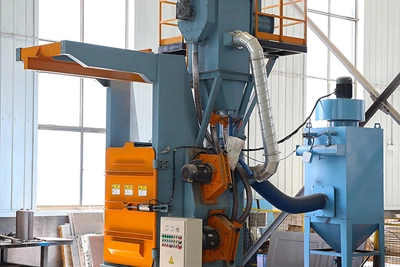
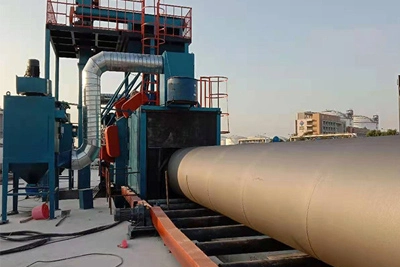
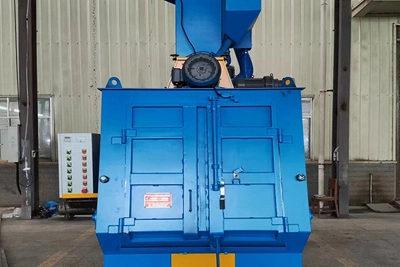
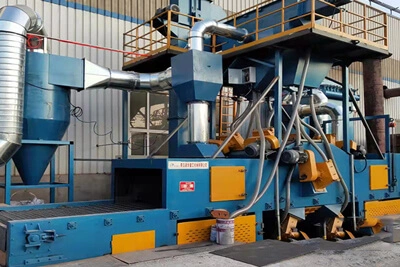
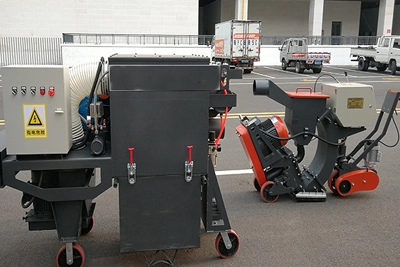

For industrial flooring contractors, road maintenance companies, shipyards, bridge repair teams, and surface preparation service providers, the Mobile Shot Blasting Machine is generally the better choice. It delivers cleaner results, lower operating cost, and far better environmental performance compared to traditional sandblasting.
Traditional sandblasting still has niche applications, but for most modern surface preparation tasks—especially concrete, steel decks, and road surfaces—mobile shot blasting now sets the industry standard.
Below is a detailed, expert comparison based on real project conditions, contractor feedback, and “People Also Ask” questions from Google search.
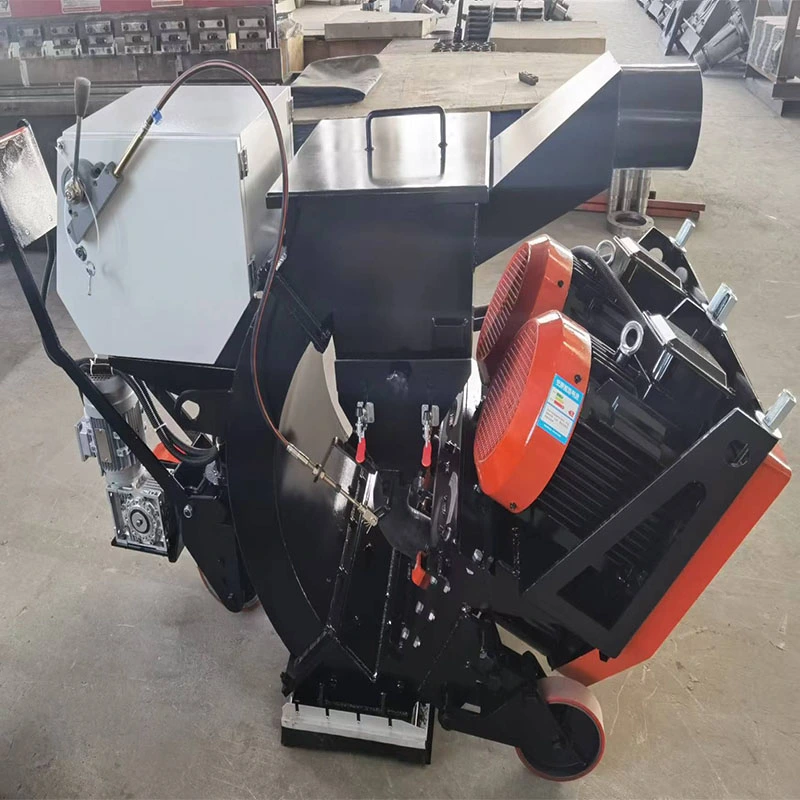
Removes laitance, coatings, rust, and contamination in a single pass.
Processing speed: up to 200–300 m² per hour depending on model.
Ideal for large-area continuous work such as highways, airport runways, steel decks, tunnels, and industrial flooring.
Self-propelled design ensures consistent forward speed and surface profile.
Typical productivity: 20–60 m² per hour depending on operator skill and compressor quality.
Requires stopping for abrasive refill, air compressor cooling, and cleanup.
High overspray makes indoor or densely populated work difficult.
Conclusion: Mobile shot blasting provides 3–5 times higher productivity, making it the clear choice for contractors handling large, continuous surfaces.
Google PAA often asks:
"Does shot blasting give a better finish than sandblasting?"
Produces uniform surface profile (CSP 2–4 for concrete).
Ideal for coatings, waterproof systems, epoxy flooring, and anti-skid treatments.
Removes contaminants without micro-cracking the surface.
Leaves a textured finish perfect for bonding.
Quality heavily depends on operator skill.
More suitable for precision cleaning of irregular objects rather than large flat surfaces.
Can cause over-blasting or uneven profiles on concrete surfaces.
Conclusion: For flooring and pavement preparation, the Mobile Shot Blasting Machine provides superior, repeatable results.
One of the most searched questions on Google is:
"Is shot blasting environmentally friendly?"
Fully enclosed blasting chamber prevents airborne dust.
Abrasive is automatically recycled inside the machine.
Minimal pollution, compliant with strict environmental regulations.
Suitable for indoor work or areas sensitive to dust (airports, tunnels, food plants).
Generates large amounts of dust and overspray.
Requires heavy protective equipment and dust collectors.
Often restricted in urban or indoor environments due to air pollution.
Conclusion: Mobile shot blasting is the preferred method where environmental regulations and workplace safety matter.
Abrasive recycling rate: 95–98%.
Lower air compressor usage (or none, depending on model).
Minimal cleanup cost because spent abrasive is collected internally.
Only 1–2 operators needed for continuous operation.
High abrasive consumption (often 5–10× more than shot blasting).
Requires large air compressors with high energy usage.
Cleaning waste sand is labor-intensive and expensive.
More PPE required → higher labor cost.
Conclusion: Over months of daily operation, mobile shot blasting delivers significant cost savings, especially for contractors bidding long-term maintenance projects.
Designed for flat or slightly curved surfaces such as:
Industrial floors
Steel bridges
Roadways and highways
Runways
Ship decks
Parking structures
Provides consistent pattern required for coatings and anti-skid treatments.
Suitable for complex geometries such as beams, valves, irregular metal shapes, and corrosion removal on construction equipment.
More flexible for localized spot repair work.
Conclusion: Mobile shot blasting dominates large-area surface preparation, while sandblasting remains useful for small, irregular, or hard-to-reach components.
Fully enclosed blasting path minimizes worker exposure.
Noise and vibration are limited.
No silica dust risk.
High-risk method with exposure to dust, rebound particles, and noisy compressors.
Requires full PPE and respiratory protection.
Accident rate is significantly higher than automated blasting.
Conclusion: Mobile shot blasting is a much safer choice for operators and surrounding personnel.
Despite its disadvantages, sandblasting is still useful when:
The workpiece has complex shapes that cannot be handled by a mobile unit.
The project involves vertical or overhead surfaces.
The required roughness exceeds typical shot blasting profiles.
The job volume is small or irregular.
For everything else—especially large-scale, repetitive, or environmentally sensitive projects—mobile shot blasting provides better value.
Yes. It produces a predictable Concrete Surface Profile (CSP), essential for epoxy flooring, waterproof membranes, or coatings. Sandblasting cannot guarantee this uniformity.
Shot blasting removes surface laitance and adhered contaminants but does not replace chemical degreasing. Any oil-soaked concrete requires pretreatment.
Absolutely. It is widely used on ship decks, steel bridges, and steel flooring to remove rust and prepare anti-skid profiles.
Yes—typically 3–5× faster for large areas due to continuous feed and no overspray.
For most industrial and construction applications, the Mobile Shot Blasting Machine is the superior choice. It delivers:
Higher productivity
More consistent surface profiles
Lower long-term cost
Better environmental performance
Safer operation
Traditional sandblasting remains valuable for detailed or irregular cleaning, but mobile shot blasting has become the dominant method for modern surface preparation.