English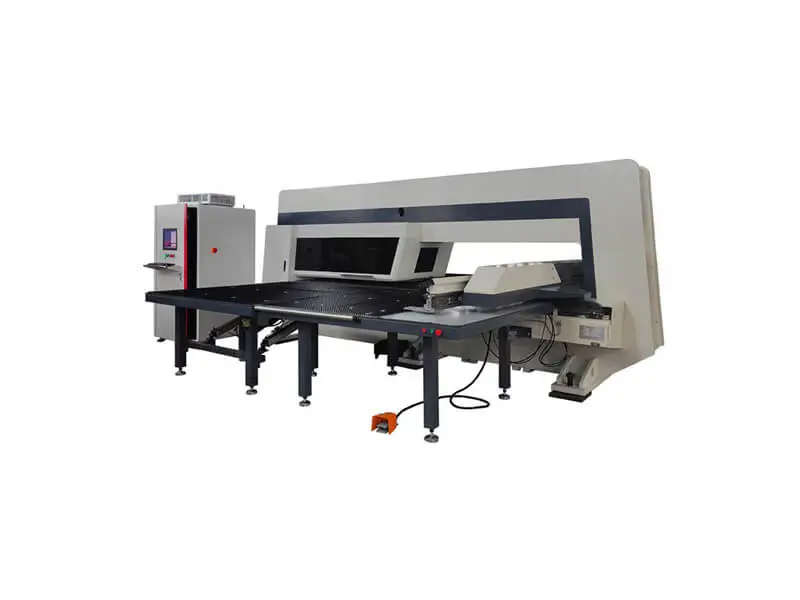

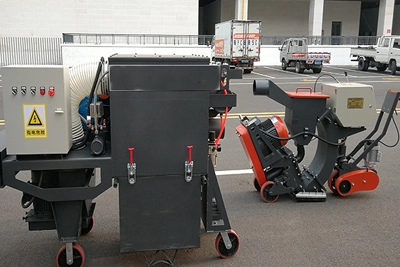

For high-volume sheet metal production with repetitive hole patterns, forming operations, and low per-part cost, a CNC Turret Punching Machine is usually the better choice. For complex contours, variable designs, and thicker materials, laser cutting offers greater flexibility and edge quality. The right decision depends on part geometry, production volume, material thickness, and downstream process requirements.
Below is a practical comparison based on real manufacturing scenarios rather than generic specifications.
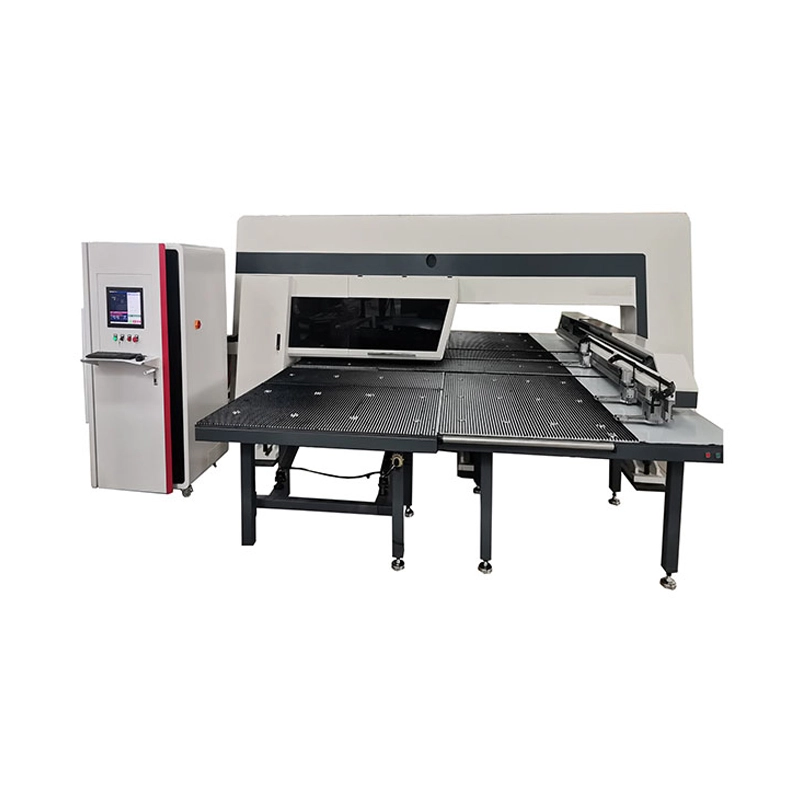
A CNC Turret Punching Machine removes material through high-speed mechanical punching using multiple punch-and-die stations mounted on a rotating turret. It can also perform:
Forming
Embossing
Louvers
Tapping (with accessories)
The process is fast, repeatable, and highly efficient for standardized parts.
Laser cutting uses a high-energy laser beam to melt or vaporize material along a programmed path. It excels at:
Complex shapes
Smooth contours
Fine detail cutting
Rapid design changes
CNC turret punching machines dominate in mass production environments.
Reasons include:
Extremely fast stroke rates
Minimal energy per hole
Continuous operation with low idle time
Lower consumable cost per part
Laser cutting is generally slower for parts with many holes, as each feature must be cut individually.
Laser cutting offers superior flexibility for:
Curved contours
Irregular outlines
Frequent design changes
Small batch customization
CNC turret punching machines perform best when:
Hole sizes are standardized
Patterns repeat across parts
Design stability is high
This distinction is critical when evaluating production mix.
CNC Turret Punching Machine
Best for thin to medium sheet metal
Highly efficient for mild steel, stainless steel, aluminum
Thickness typically up to 6 mm (depending on machine capacity)
Laser Cutting
Capable of cutting thicker plates
Suitable for reflective materials with proper configuration
Handles a wider thickness range
Laser cutting produces:
Smooth edges
Minimal burrs
Clean visual appearance
CNC turret punching machines may generate:
Minor burrs
Shear marks
However, punching avoids:
Heat-affected zones
Metallurgical changes
For parts requiring forming or welding, this can be an advantage.
CNC turret punching machines typically offer:
Lower energy consumption per part
Lower maintenance cost
Longer tool life when properly managed
Laser cutting systems involve:
Higher electricity usage
Assist gas consumption
Optics and laser source maintenance
For long production runs, punching often delivers better cost control.
One major advantage of a CNC Turret Punching Machine for sale is its ability to perform forming operations in-line:
Louvers
Countersinks
Embossing
Knockouts
Laser cutting cannot form material and requires secondary operations.
Both technologies support automation, but in different ways:
CNC turret punching machines integrate well with:
Sheet loaders
Stackers
Automated bending lines
Laser cutting systems integrate effectively with:
Flexible manufacturing cells
Mixed-batch production environments
Automation goals should influence equipment selection.
| Application | Better Choice |
High-volume perforated panels | CNC Turret Punching Machine |
Electrical enclosures | CNC Turret Punching Machine |
Decorative metal panels | Laser Cutting |
Prototype or custom parts | Laser Cutting |
Parts requiring forming | CNC Turret Punching Machine |
Thick plate cutting | Laser Cutting |
Key evaluation factors:
Annual production volume
Part design stability
Hole count and pattern repetition
Thickness range
Need for forming operations
Total cost of ownership
Many modern factories operate both systems, using each where it performs best.
A CNC Turret Punching Machine is a productivity-driven solution for standardized, high-volume sheet metal parts, while laser cutting excels in flexibility and design freedom. Choosing between them is less about technology preference and more about matching equipment capability to your actual production profile.
From a long-term investment standpoint, understanding where each process delivers the highest value is key to maximizing efficiency and profitability.