English

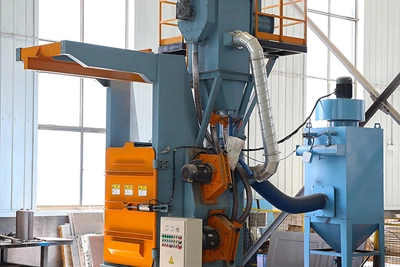
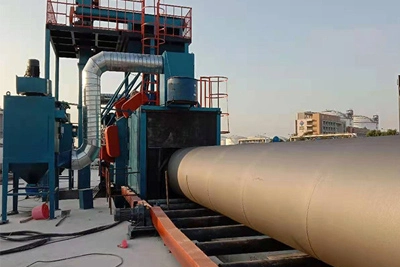
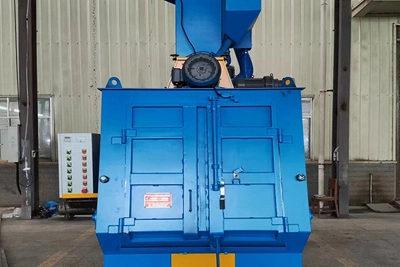
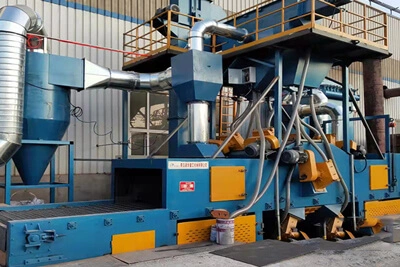
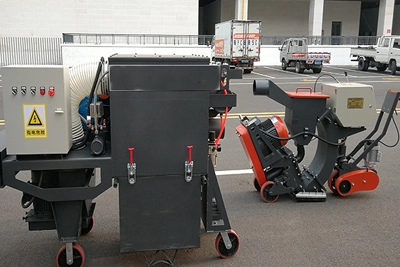

A Pass Through Shot Blasting Machine is designed for continuous, in-line surface treatment, while a batch type shot blasting machine is intended for intermittent, load–blast–unload operations. The choice directly affects throughput, labor efficiency, surface consistency, and long-term operating cost.
Below is a technical, buyer-oriented comparison based on real production environments in steel fabrication, structural manufacturing, and coating lines.
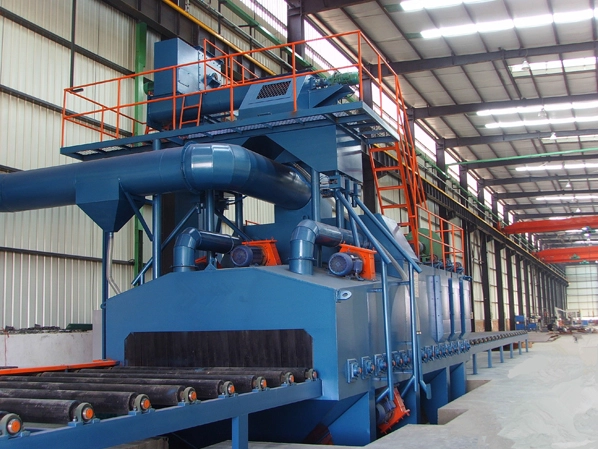
A Pass Through Shot Blasting Machine moves workpieces continuously through the blasting chamber via:
Roller conveyors
Chain conveyors
Overhead monorails (for hanging parts)
Blasting turbines are arranged to cover all exposed surfaces as the workpiece travels through the machine at a controlled speed. This design allows blasting to occur without stopping the line.
Typical applications include:
Steel plates
Beams and profiles
Pipes and tubes
Structural components before painting or coating
Batch type machines process parts in cycles:
Load parts into the chamber
Close the door
Blast for a preset time
Unload parts
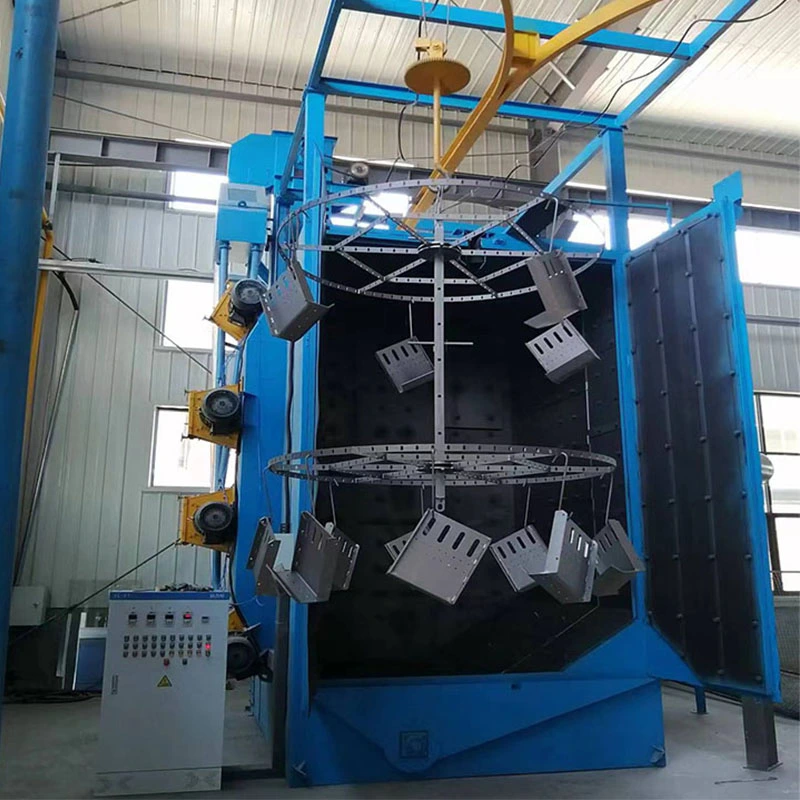
Common batch designs include:
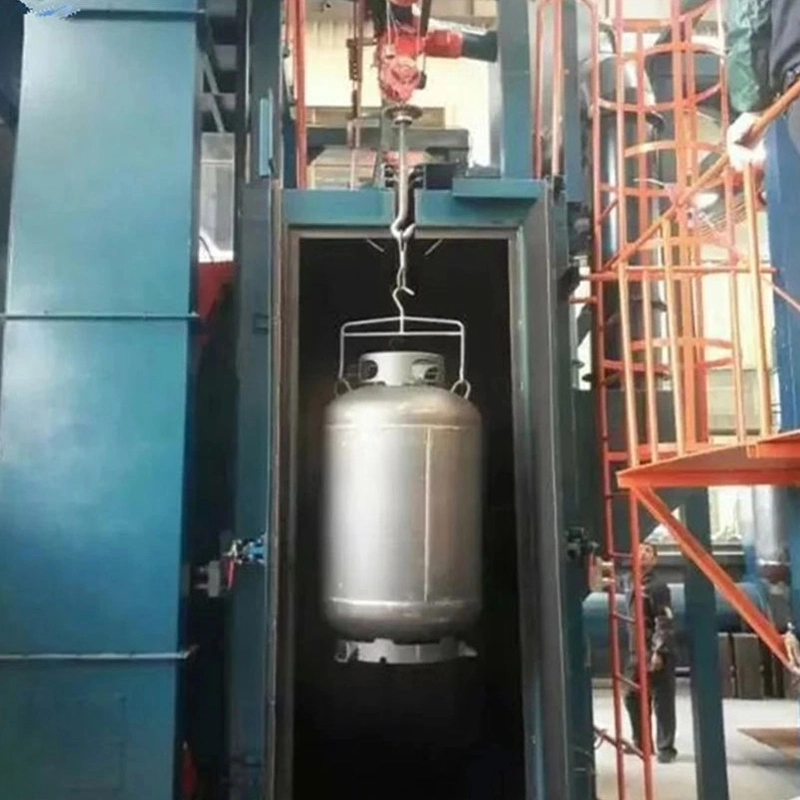
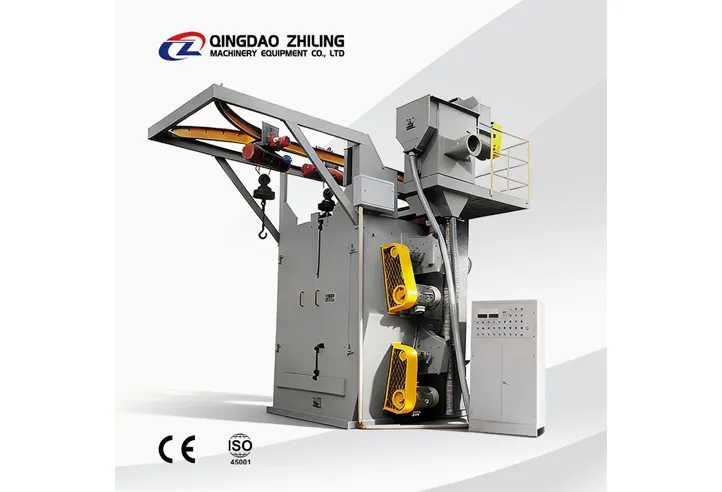
Hanger type
Tumble belt
Table type
Drum type
Batch systems are widely used where:
Part geometry varies
Production volume is lower
Flexibility is more important than speed
Production efficiency strongly favors the Pass Through Shot Blasting Machine.
Key reasons:
Continuous operation eliminates idle time
No repeated loading and unloading cycles
Easy integration with upstream and downstream equipment
In contrast, batch machines lose time during every cycle, especially when handling large or heavy workpieces.
For high-volume fabrication lines, the productivity difference can be substantial.
Pass-through machines offer more uniform and repeatable surface quality because:
Conveyor speed is controlled
Blasting exposure is consistent
Turbine angles remain fixed
Batch type machines rely more on:
Part placement
Operator loading consistency
Variable blasting coverage
For coating preparation where adhesion quality matters, pass-through systems provide a clear advantage.
Batch type machines are more flexible when:
Part sizes change frequently
Shapes are complex or irregular
Hanging or tumbling is required
Pass Through Shot Blasting Machines perform best when:
Parts are standardized
Dimensions fall within a defined range
Production runs are long and repetitive
This distinction is critical during equipment selection.
A Pass Through Shot Blasting Machine significantly reduces manual handling by:
Automating part movement
Supporting in-line production
Minimizing operator intervention
Batch machines often require:
Manual loading and unloading
Frequent supervision
More labor per processed ton
From an operational cost perspective, labor savings are a major driver for pass-through installations.
Pass-through systems require:
Straight-line space
Entry and exit zones
Conveyor alignment with production flow
Batch machines:
Occupy smaller footprints
Fit more easily into existing workshops
Offer easier relocation
Facility layout often becomes a deciding factor.
Pass Through Shot Blasting Machine
Higher initial investment
Lower cost per square meter or per ton processed
Better energy utilization at scale
Batch Type Machine
Lower purchase cost
Higher unit processing cost over time
Increased labor and idle energy loss
For continuous production, pass-through systems typically achieve faster payback.
| Application | Better Choice |
Steel plate pretreatment lines | Pass Through |
Structural steel fabrication | Pass Through |
Mixed small parts | Batch Type |
Low-volume custom components | Batch Type |
Automated coating lines | Pass Through |
Key decision factors include:
Daily throughput requirement
Part size consistency
Available workshop space
Labor cost sensitivity
Future automation plans
Selecting the wrong type often leads to bottlenecks or underutilized equipment.
A Pass Through Shot Blasting Machine is a strategic investment for manufacturers focused on high throughput, automation, and surface consistency. Batch type machines remain practical for flexible, lower-volume operations where part variety is high.
From both a technical and commercial standpoint, the right choice depends on aligning equipment capability with your actual production model, not just current output.