English

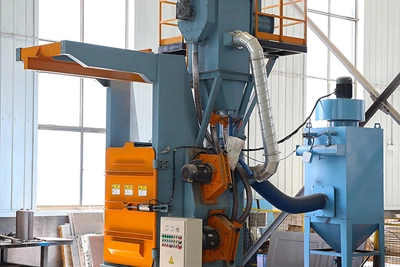
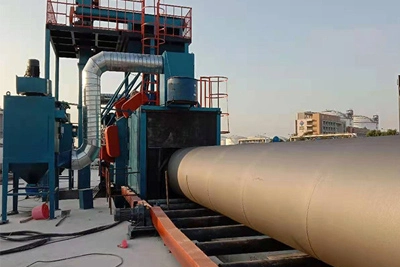
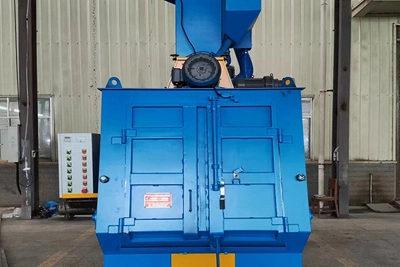
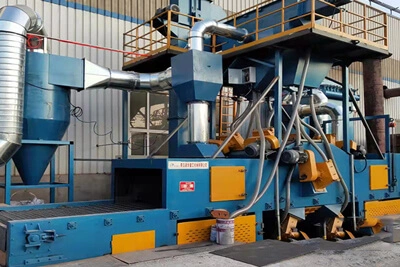
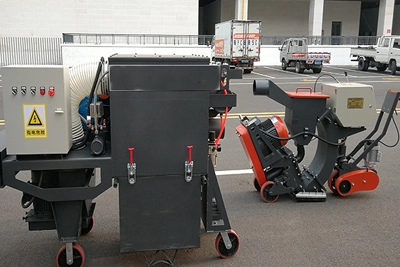

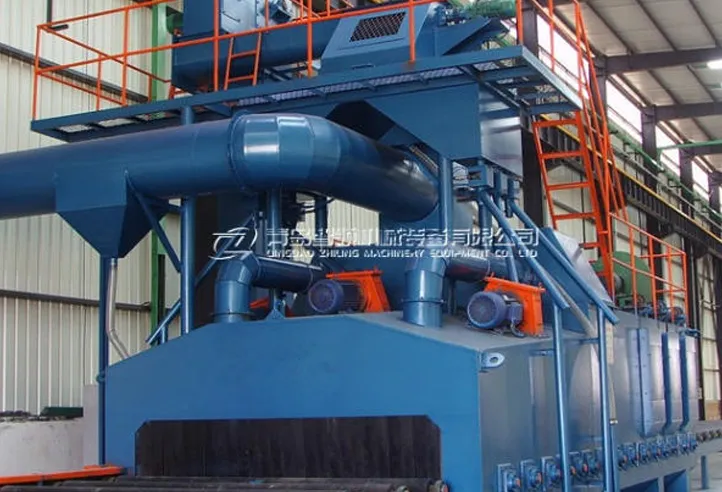
In a Steel Plate Shot Blasting Machine, cleaning efficiency is largely determined by how blast wheels are positioned, angled, and synchronized with conveyor speed. An optimized blast wheel layout delivers uniform descaling, higher line speed, and lower abrasive consumption, while a poor layout creates shadow zones, over-blasting, and unnecessary wear. For plate pretreatment lines, wheel arrangement is often the difference between meeting coating standards consistently and fighting rework.

Adding more blast wheels does not automatically improve performance. What matters is effective coverage across the full plate width and thickness profile.
Key factors influenced by layout:
Shot impact angle and density
Coverage overlap between wheels
Uniformity across leading/trailing edges
Bottom-surface exposure on roller conveyors
In a Steel Plate Shot Blasting Machine, layout design must match plate width range, thickness, and target throughput.
Most plate blasting machines use a combination of top and bottom wheels, sometimes with angled side wheels for wide plates.
Common configurations include:
4-wheel layout (2 top, 2 bottom) for light to medium duty
6–8 wheel layouts for high-throughput pretreatment lines
Angled wheels to improve edge and corner coverage
The objective is continuous, overlapping shot streams that leave no untreated zones.
Yes. Angle determines impact energy distribution and rebound behavior.
Shallow angles improve sweeping action for light scale
Steeper angles increase cutting action for heavy mill scale
Opposing angles reduce streaking and uneven profiles
Proper angling also reduces shot rebound onto rollers, extending conveyor life.
Edges and corners are common failure points in plate blasting.
Well-designed layouts:
Direct shot streams toward plate edges
Use angled wheels to prevent shadowing
Balance coverage so edges are not over-blasted
Inadequate layout often results in clean centers and poorly prepared edges, leading to coating adhesion issues.
Wheel layout sets the maximum achievable conveyor speed without sacrificing surface quality.
Dense coverage allows higher speed
Sparse coverage forces slower lines
In a Steel Plate Shot Blasting Machine, wheel placement should be engineered to maintain required cleanliness at the target production speed, not at reduced test speeds.
Bottom-side cleaning is critical but often underestimated.
Effective designs:
Position bottom wheels between rollers
Coordinate wheel throw direction with plate travel
Minimize shielding caused by roller contact
Poor bottom-wheel placement leads to partial cleaning and inconsistent results.
Uneven abrasive flow causes:
Over-cleaning in some zones
Under-cleaning in others
Increased abrasive consumption
Balanced distribution ensures each blast wheel contributes equally to overall cleaning efficiency.
From field experience, frequent issues include:
Aligning all wheels at the same angle
Ignoring edge zones on wide plates
Overpowering wheels instead of improving coverage
Designing for maximum width but neglecting narrow plates
These errors reduce both efficiency and equipment life.
When specifying a Steel Plate Shot Blasting Machine, provide:
Plate width and thickness range
Required surface cleanliness and roughness
Target conveyor speed
Annual production volume
This allows suppliers to design a layout that balances efficiency, quality, and operating cost.
| Plate Width | Recommended Approach |
≤1500 mm | 4–6 wheels, focused overlap |
1500–2500 mm | 6–8 wheels, angled coverage |
≥3000 mm | Multi-angle layout with edge focus |
Actual designs should be validated by coverage simulation or field testing.
In steel plate pretreatment, blast wheel layout defines performance. A well-engineered Steel Plate Shot Blasting Machine achieves higher throughput, consistent surface quality, and lower cost per square meter by optimizing wheel position and angle—not by simply increasing power.