English

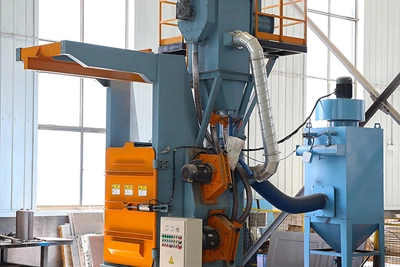
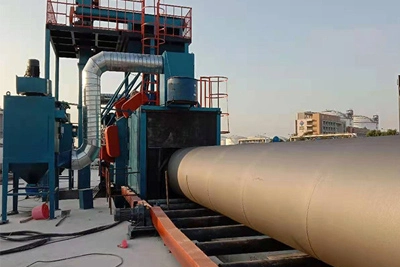
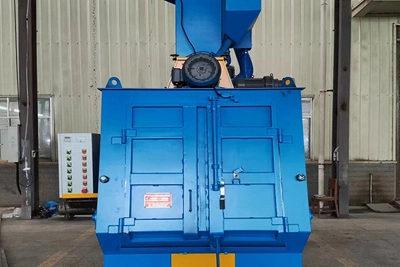
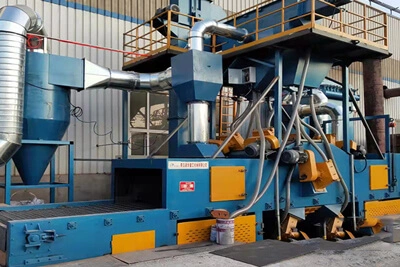

A Sand Blasting Booth is the better choice for controlled, repeatable, and compliant industrial blasting, while open sand blasting is only suitable for occasional, low-budget, or outdoor applications where precision, dust control, and abrasive recovery are not critical.
If your goal is production efficiency, operator safety, environmental compliance, and long-term cost control, a sand blasting booth is the clear winner.
| Factor | Sand Blasting Booth | Open Sand Blasting |
Dust control | Fully enclosed, filtered | Uncontrolled |
Abrasive recovery | High (80–95%) | Very low |
Surface consistency | Stable and repeatable | Operator-dependent |
Environmental compliance | Easy to meet | Difficult or impossible |
Operating cost (long term) | Lower | Higher |
Suitable for production | Yes | No |
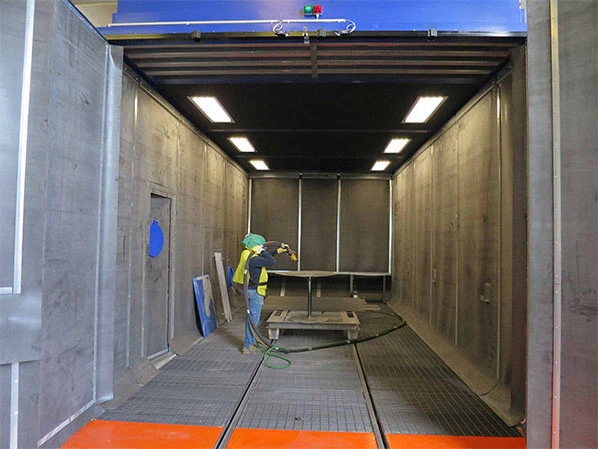
A Sand Blasting Booth for sale is a closed system that integrates:
Enclosure structure
Abrasive recovery floor (screw / pneumatic / belt)
Dust collection system
Lighting and ventilation
Operator safety protection
Open sand blasting, by contrast, involves blasting directly in open areas or temporary zones with minimal dust containment.
Industry reality:
What looks cheaper at the beginning (open blasting) often becomes more expensive within months due to abrasive loss, cleanup labor, and compliance risks.
A Sand Blasting Booth delivers more uniform and controllable surface quality.
Stable airflow keeps abrasive impact consistent
Controlled rebound reduces shadow zones
Proper lighting improves operator accuracy
Open sand blasting suffers from:
Wind interference
Uneven abrasive impact
Poor visibility due to airborne dust
For applications like:
Coating preparation
Anti-corrosion treatment
Precision fabrication
a sand blasting booth is strongly recommended.
In most regions, no.
Open blasting creates:
High dust dispersion
Silica exposure risks
Environmental complaints
Regulatory penalties
A Sand Blasting Booth uses cartridge or bag-type dust collectors to:
Capture fine particles
Protect workers
Meet emission standards
From a project approval perspective:
Many factories are forced to upgrade to booths after failing inspections — paying twice.
A Sand Blasting Booth is far more economical long term.
Sand Blasting Booth: Reusable abrasive, controlled recycling
Open Sand Blasting: One-time use, massive loss
With a booth, abrasive can be reused dozens or even hundreds of cycles, depending on media type.
Hidden cost of open blasting:
Continuous abrasive purchase
Cleanup labor
Disposal fees
A Sand Blasting Booth provides:
Enclosed environment
Proper ventilation
Lower dust exposure
Reduced noise leakage
Open sand blasting exposes operators to:
Respirable dust
Poor visibility
Higher fatigue
Long-term health risks
Industry trend:
More companies are eliminating open blasting due to occupational health requirements.
No.
Open blasting:
Has inconsistent cycle times
Requires frequent cleanup
Interrupts surrounding operations
A Sand Blasting Booth supports:
Continuous operation
Predictable blasting cycles
Integration with cranes or conveyors
This is why booths are standard in:
Fabrication workshops
Steel structure plants
Shipbuilding and heavy equipment manufacturing
Not necessarily.
While a booth is enclosed, it:
Eliminates the need for large cleanup zones
Reduces surrounding contamination
Can be customized to site layout
Open blasting often spreads debris over a larger area, increasing effective space usage.
Open sand blasting may be used when:
Work is outdoors
Parts are very large and immovable
Blasting is infrequent
Environmental regulations are minimal
Even in these cases, temporary containment or partial enclosures are strongly advised.
From an industry and ROI perspective:
Choose a Sand Blasting Booth if you care about:
Consistent surface quality
Environmental compliance
Operator safety
Long-term operating cost
Professional production image
Open sand blasting should only be considered a short-term or emergency solution, not a sustainable industrial process.