English

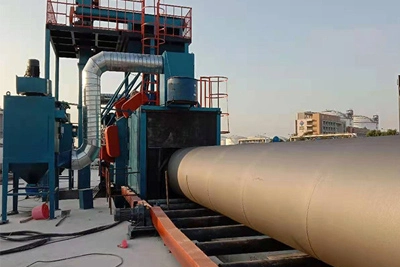
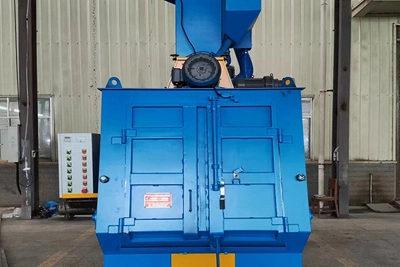
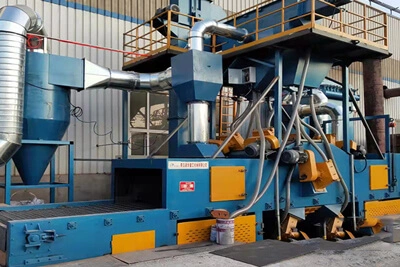
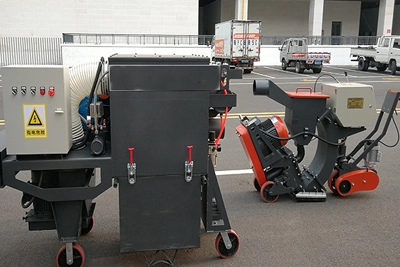

In a Pass Through Shot Blasting Machine, the conveyor system determines what kind of parts you can process, how stable blasting quality will be, and how well the machine integrates into your production line. Roller conveyor designs are better suited for heavy, rigid, flat-bottom workpieces, while belt conveyor systems perform best with smaller, lighter, or irregularly shaped parts.
Choosing the wrong conveyor type often leads to unstable part movement, uneven blasting, or premature wear—issues that directly affect production efficiency and surface quality.
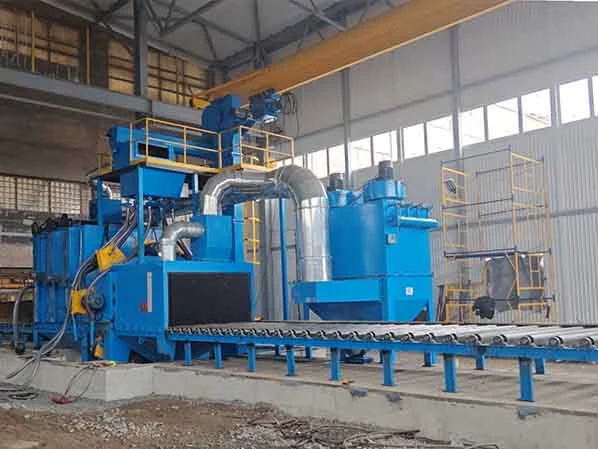
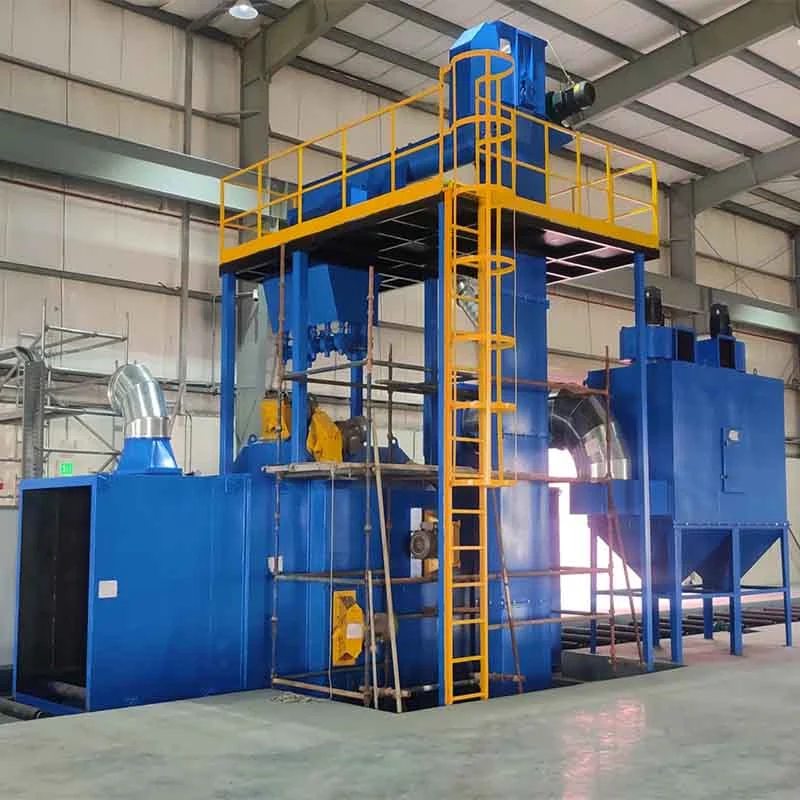
Roller conveyor pass-through machines use motor-driven rollers to transport workpieces through the blasting chamber at a controlled speed.
This configuration is commonly applied in:
Steel plate pretreatment lines
Structural beams and profiles
Welded frames and flat panels
The workpiece remains fully supported on multiple rollers, ensuring stable movement throughout blasting.
Belt conveyor pass-through systems use a continuous steel or rubber belt to carry parts through the blasting zone.
They are typically used for:
Smaller fabricated parts
Irregular shapes without flat bases
Components that may tip or shift on rollers
The belt provides full-surface support, preventing parts from falling or rotating during blasting.
Roller conveyor systems are preferred for heavy and rigid workpieces.
Reasons include:
Higher load-bearing capacity
Minimal belt deformation
Easier alignment for long or wide parts
Belt conveyors are limited by:
Belt tension and wear
Heat and impact resistance
Maximum allowable part weight
For steel plates, H-beams, or large weldments, roller conveyors are the industry standard in Pass Through Shot Blasting Machines.
Blasting coverage depends on how much of the part surface is exposed during transport.
Roller Conveyor
Bottom surface partially shielded by rollers
Often combined with roller turning devices or additional blast wheels
Belt Conveyor
Larger bottom contact area
Less exposure unless belt is perforated or combined with lift mechanisms
For applications requiring full 360° coverage, both systems need supplementary design measures.
Roller Conveyor
Individual rollers can be replaced
Bearings require regular inspection
Lower overall wear from abrasive impact
Belt Conveyor
Belt is a high-wear component
Replacement is more costly and time-consuming
Sensitive to sharp edges and hot parts
From a lifecycle cost perspective, roller conveyors typically offer longer service life in abrasive environments.
Roller conveyors integrate seamlessly with:
Steel structure production lines
CNC cutting and welding stations
Automatic painting and coating systems
Belt conveyors are better suited for:
Compact layouts
Lower-speed processing
Mixed or unstable part geometries
A Pass Through Shot Blasting Machine intended for inline production usually favors roller conveyor design.
Roller conveyors provide:
Stable transport for rigid parts
Lower vibration during blasting
Belt conveyors:
Absorb vibration better for small parts
Can generate tracking issues if poorly maintained
Operational stability becomes critical in high-speed blasting lines.
| Application | Better Choice |
Steel plate pretreatment | Roller Conveyor |
Structural beams | Roller Conveyor |
Irregular small parts | Belt Conveyor |
Thin or unstable components | Belt Conveyor |
High-throughput production lines | Roller Conveyor |
Key selection factors include:
Part weight and geometry
Surface exposure requirements
Production speed
Maintenance capability
Integration with upstream/downstream equipment
A mismatch between part characteristics and conveyor type is one of the most common causes of poor blasting performance.
For most heavy-duty industrial applications, roller conveyor Pass Through Shot Blasting Machines provide better durability, stability, and long-term cost control. Belt conveyor designs remain valuable for lighter, irregular parts where full support is essential.
From a technical and commercial standpoint, conveyor selection should be based on actual workpiece behavior inside the blasting chamber, not just theoretical load capacity.