English

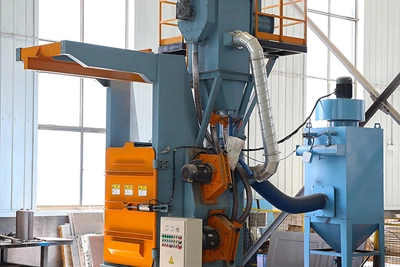
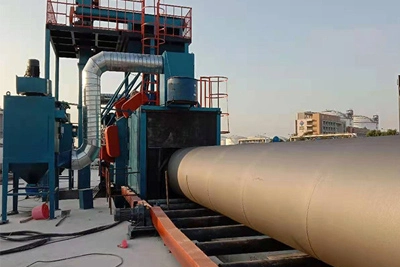
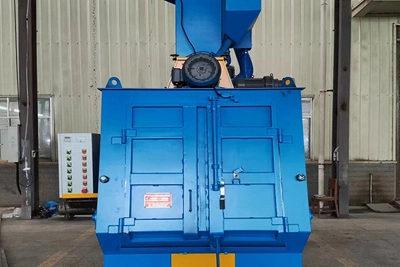
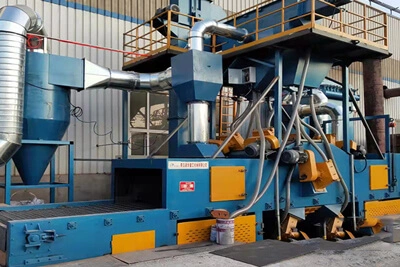
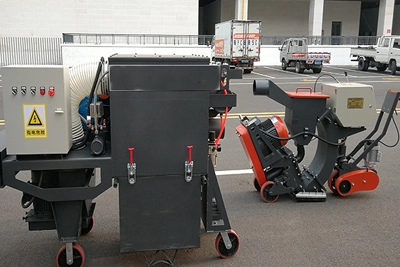

Among shot blasting equipment, the hook-type shot blasting machine is a widely used model. Its working method differs significantly from crawler-type and roller-type machines: the workpiece is suspended in the shot blasting chamber by a hook and receives multi-angle shot blasting from the shot blasters during rotation. This structure determines its specific applicable scope and selection logic.
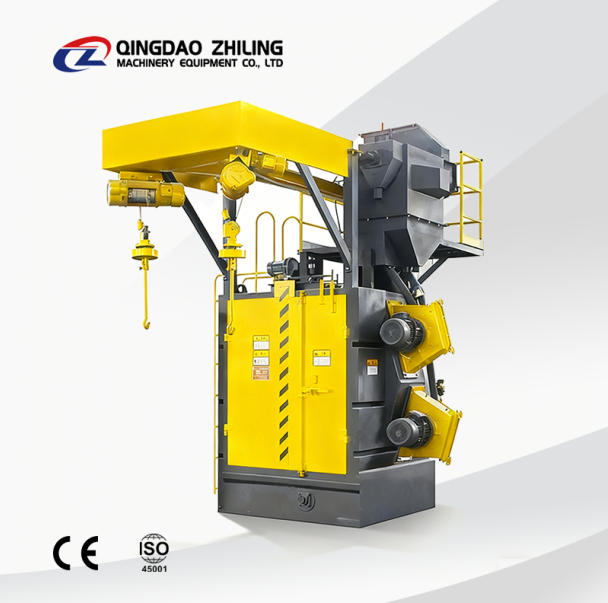
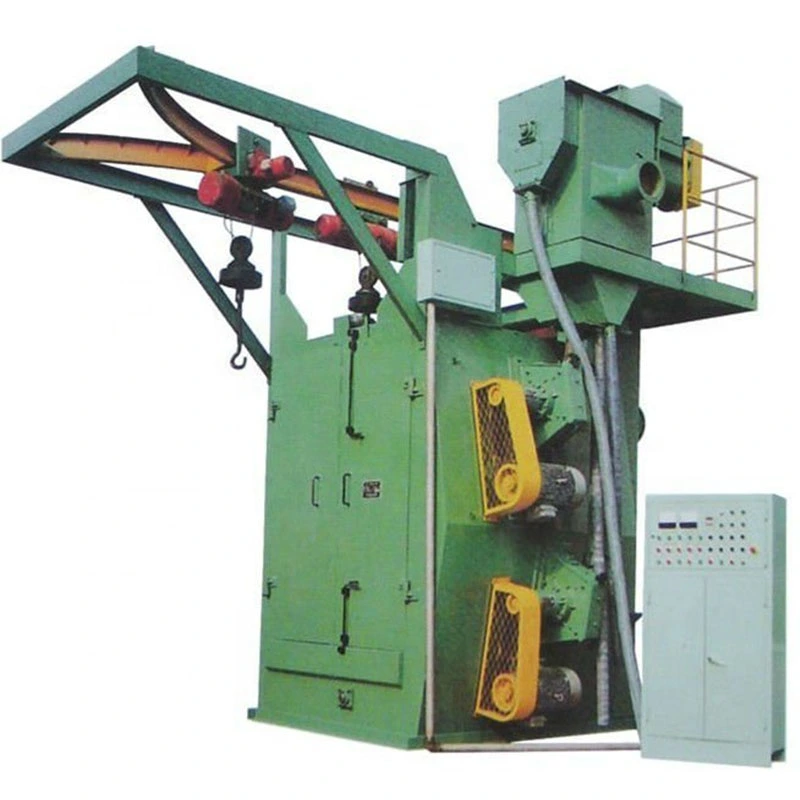
The hook-type shot blasting machine adopts a suspended operation method. The workpiece is suspended from the hanging device in the shot blasting chamber by a hook or lifting device, and the drive mechanism drives the workpiece to rotate at a constant speed inside the chamber. Shot blasters arranged at different positions in the chamber propel shot at high speed onto the workpiece surface. Due to the continuous rotation of the workpiece, the blasting coverage can cover the outer surface, inner cavity, and deep holes of the workpiece. After cleaning, the hook sends the workpiece out of the shot blasting chamber and into the unloading station.
Hook configurations can be divided into single-hook and double-hook types. Single-hook configurations are suitable for small to medium batch production, while double-hook configurations allow for alternating operations, with one hook cleaning inside the shot blasting chamber and the other loading and unloading outside, reducing equipment downtime and improving equipment utilization.
Hook-type shot blasting machines are suitable for workpieces with the following characteristics:
Complex-shaped workpieces. These include castings with internal cavities, deep holes, or complex curved surfaces, such as engine blocks, gearbox housings, pump bodies, and valve bodies. These workpieces are difficult to achieve uniform shot coverage in tracked equipment, and there is a risk of collision during tumbling. The suspended rotation method allows the shot to enter the internal cavities and deep holes from multiple angles, resulting in more thorough cleaning.
Workpieces susceptible to collision damage. For example, precision-machined parts, threaded fasteners, and thin-walled castings. In hook-type shot blasting machines, each workpiece is independently suspended, preventing contact between them and avoiding surface damage or dimensional deviations caused by collisions.
Large single-piece workpieces. These include large castings, forgings, welded structural parts, and frame-like parts. These workpieces are relatively heavy, making batch processing in crawler-type equipment inconvenient, and unsuitable for conveying on roller conveyor equipment. Using a hook suspension method simplifies loading and unloading operations.
Workpieces requiring surface strengthening. For example, gears, crankshafts, connecting rods, springs, and other parts subjected to alternating loads. Shot blasting can form a compressive stress layer on the metal surface, helping to improve the fatigue strength of the workpiece. Hook-type equipment allows for more precise control of blasting parameters and coverage, making it suitable for applications with specific strengthening requirements.
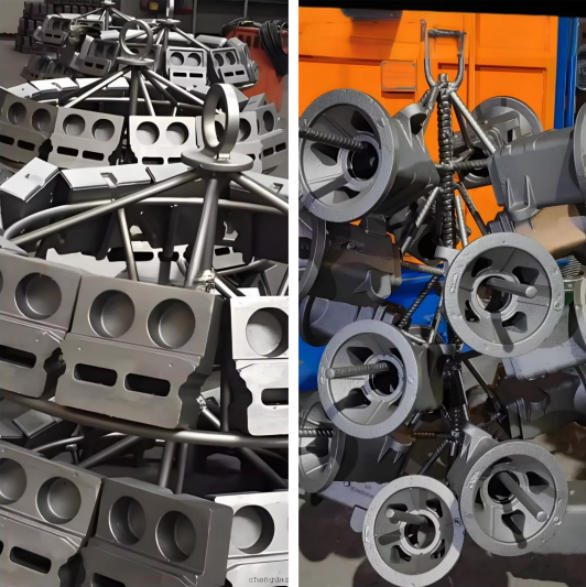
When selecting a hook-type shot blasting machine, the following technical parameters and configuration options need to be considered:
Hook load capacity. Determine the rated load of the hook based on the weight of the individual workpiece. The load capacity must cover the weight of the largest workpiece, with a certain safety margin. The single hook load capacity is typically in the range of 500 kg to 5000 kg, and can be selected according to requirements.
Cleaning chamber size. The effective working space of the shot blasting chamber must meet the requirements of the workpiece's dimensions. It is necessary to ensure that the workpiece can pass smoothly through the doorway of the cleaning chamber and does not interfere with the inner wall of the chamber during rotation. The dimensions of the cleaning chamber should be determined based on the length, width, and height of the largest workpiece.
Shot Blasting Configuration. The number, power, and arrangement angle of the shot blasters directly affect the cleaning efficiency and effect. For workpieces with complex shapes, it is recommended to configure multiple shot blasters to blast from different directions to reduce blind spots. The blasting speed and shot flow rate can be adjusted according to the workpiece material and cleaning requirements.
Hook Type. Single-hook configurations are simple in structure and suitable for small-batch, multi-variety production. Double-hook configurations allow for alternating operations and are suitable for continuous production. Some equipment also provides lifting hooks for easy loading and unloading of heavy workpieces.
Dust Collection System. Hook-type shot blasting machines should be equipped with a high-efficiency dust collection system to ensure that dust emissions meet environmental standards. The dust collector type is usually a cartridge dust collector, and the appropriate airflow should be matched according to the shot blasting chamber volume and shot blaster power.
Hook-type shot blasting machines are widely used in the following industries:
- Automotive Manufacturing: Cleaning and strengthening of engine blocks, cylinder heads, crankshafts, connecting rods, wheel hubs, gearbox housings, and other components.
- Construction Machinery Industry: Rust removal and descaling of excavator parts, hydraulic components, gears, bearing housings, and other large, medium, and small structural components.
- Valve and Pump Industry: Internal cleaning of complex castings such as various valve housings, pump bodies, and impellers.
- General Machinery Manufacturing: Surface treatment of parts such as motor housings, reducer housings, bearing housings, and flanges.
- Foundry Industry: Sand removal and descaling of casting surfaces to provide a clean surface for subsequent processing or inspection.
Daily maintenance of hook-type shot blasting machines mainly includes the following aspects:
Check the wear condition of the shot blaster blades. After the blades wear down, they should be replaced in groups in a timely manner, and attention should be paid to maintaining the weight consistency of each group of blades to maintain the dynamic balance of the impeller.
Check the operating status of the hook and lifting device. The lifting and rotating mechanisms of the hook should be lubricated regularly, and checked for abnormal wear or deformation.
Check the pressure differential of the dust removal system. If the pressure differential is too high, the filter cartridges need to be cleaned or replaced to ensure dust removal efficiency.
Check the wear condition of the wear-resistant protective plates. The protective plates inside the shot blasting chamber should be replaced promptly after wear to protect the chamber structure.
The core value of a hook-type shot blasting machine lies in handling workpieces with complex shapes, susceptible to impact, and with large individual weights, as well as in situations where surface strengthening is required during cleaning. When selecting a model, the hook load-bearing capacity, cleaning chamber size, and hook configuration should be determined based on the workpiece's weight, dimensions, shape complexity, and production volume.
For further information on specific model technical parameters or selection advice, please provide workpiece drawings or on-site working condition information for a targeted evaluation by the technical team.