English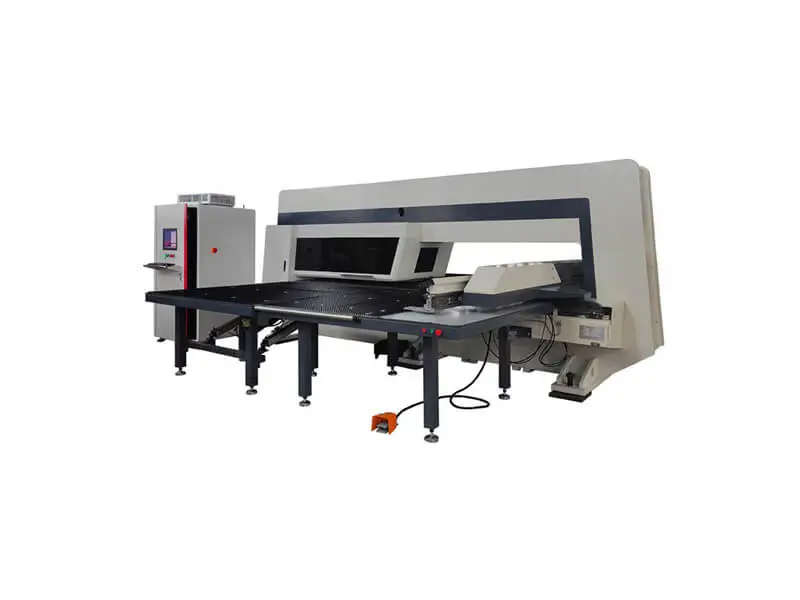

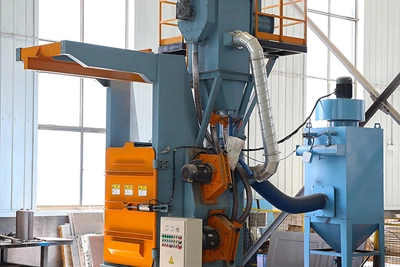
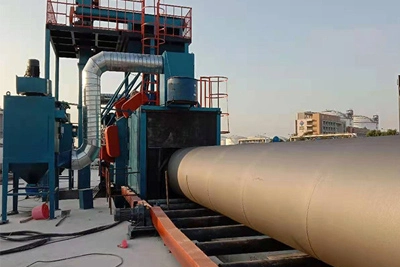
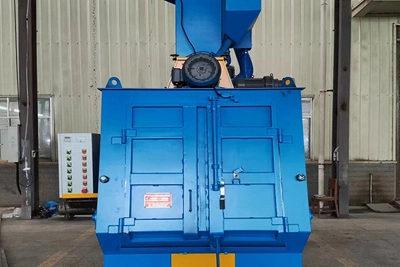
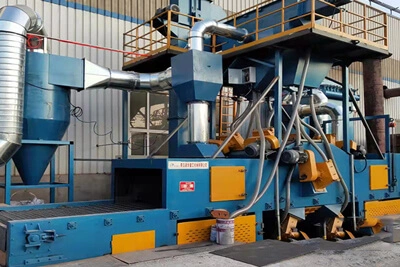
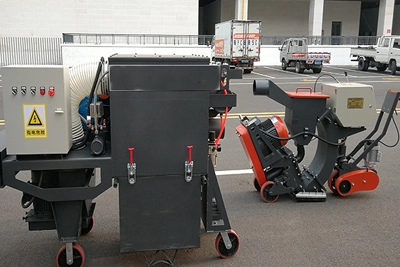

In the field of metal surface treatment, shot blasting and sandblasting are two of the most frequently mentioned processes. Many customers often cannot distinguish between the two when purchasing equipment. This article will outline the core differences between these two processes from three dimensions: working principle, applicable scope, and economics.
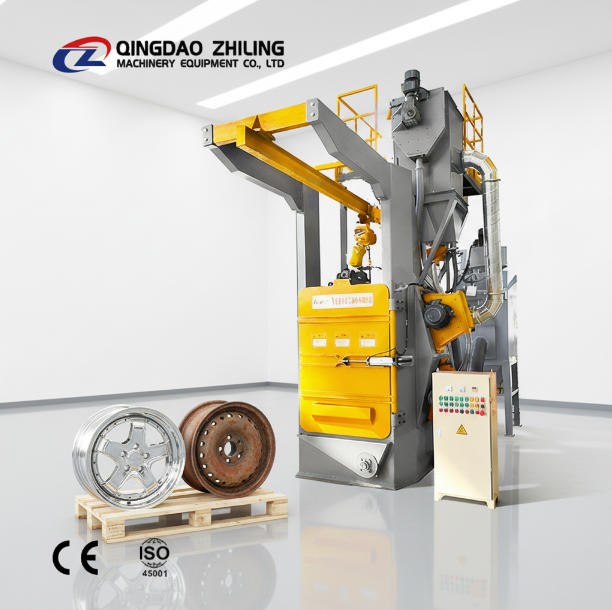
Although both shot blasting and sandblasting use high-speed abrasive particles to impact the workpiece surface, their power sources and abrasive acceleration methods are completely different.
1. Shot Blasting: Centrifugal Force-Driven "Bullet Rain"
The core component of a shot blasting machine is a high-speed rotating shot blasting turbine. A motor drives an impeller to rotate, propelling metal abrasive particles such as steel shot and steel grit outwards using centrifugal force. This impact force is high, and the coverage area is wide, making it suitable for processing large-area or batch workpieces.
Shot blasting not only cleans the surface but also forms a compressive stress layer on the metal surface. This invisible "reinforcing layer" can significantly improve the fatigue strength of parts.
2. Sandblasting: A "Sand Stream" Driven by Compressed Air
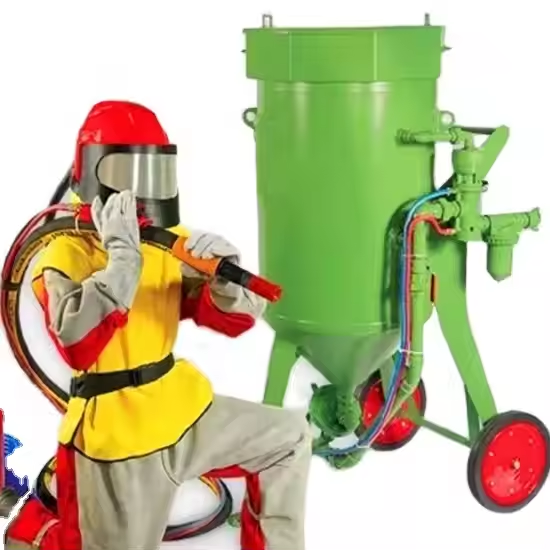
Sandblasting machines rely on compressed air as power. An air compressor generates a high-pressure airflow, propelling abrasive materials (such as quartz sand, brown corundum, and glass beads) at high speed through a spray gun onto the workpiece surface. This method is more flexible, can be handheld, and is suitable for handling workpieces with localized or complex shapes.
Sandblasting has a relatively gentle impact, primarily achieving surface cleaning and roughening, without strengthening capabilities.
3. An Intuitive Analogy
The difference between the two can be understood as follows: Shot blasting is like "firing" a shotgun at the workpiece, with a wide coverage area and strong impact; sandblasting is like "washing" with a high-pressure water gun, more precise and flexible. While this analogy isn't entirely accurate, it helps in understanding the fundamental differences between the two.
Different working principles determine that each process has its own strengths.
1. What workpieces are suitable for shot blasting?
Shot blasting machines excel at processing large batches of small to medium-sized workpieces that are not susceptible to impact, as well as critical components requiring strengthening.
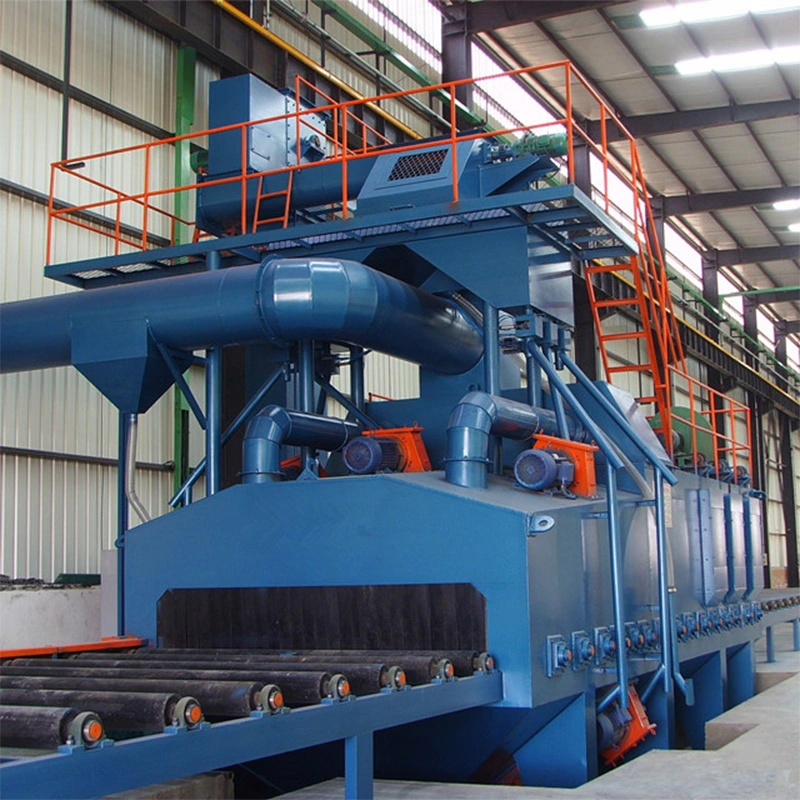
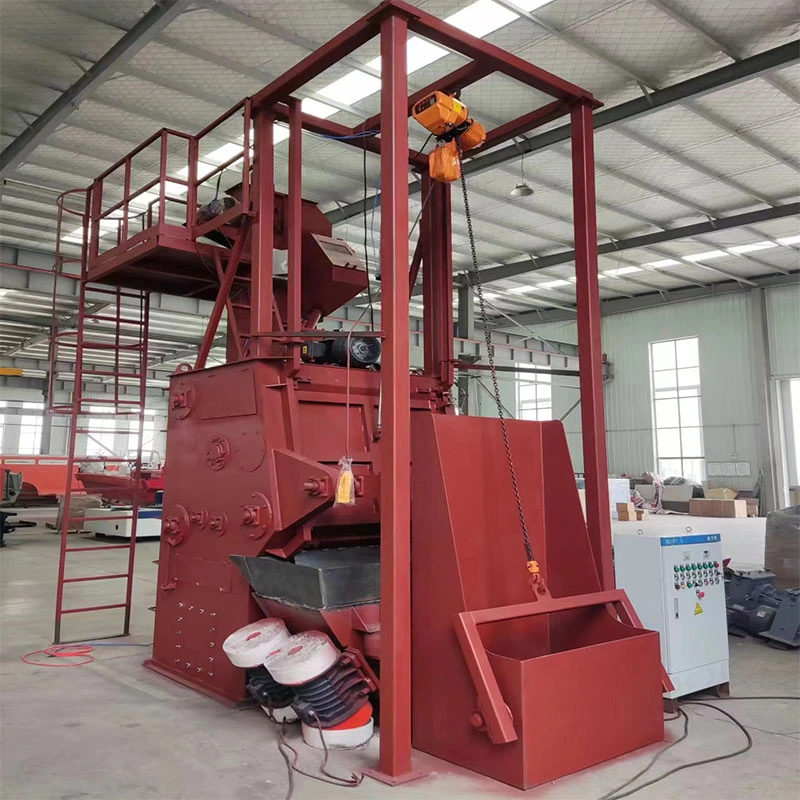
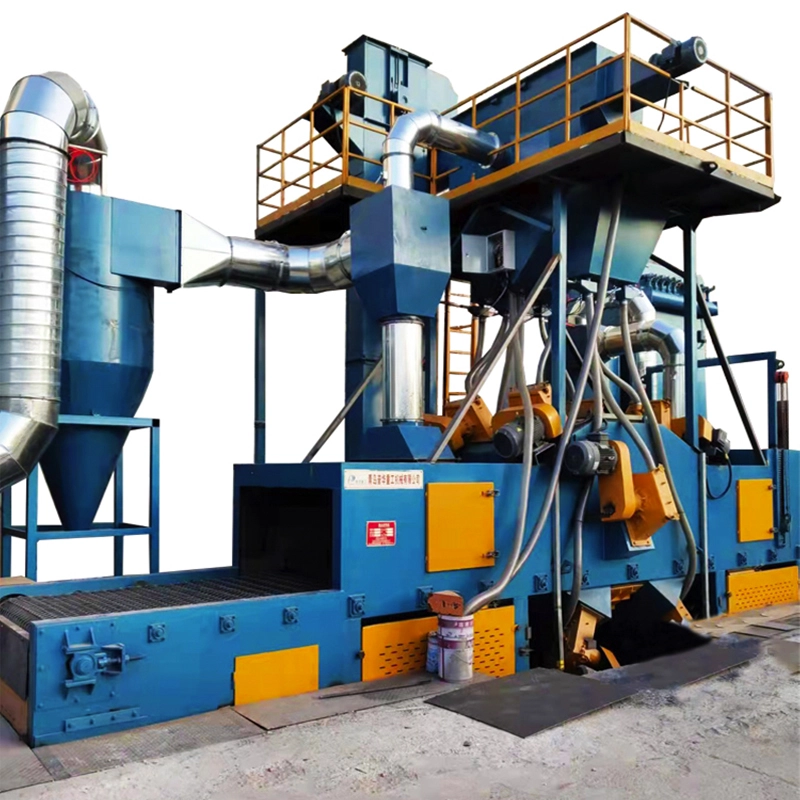
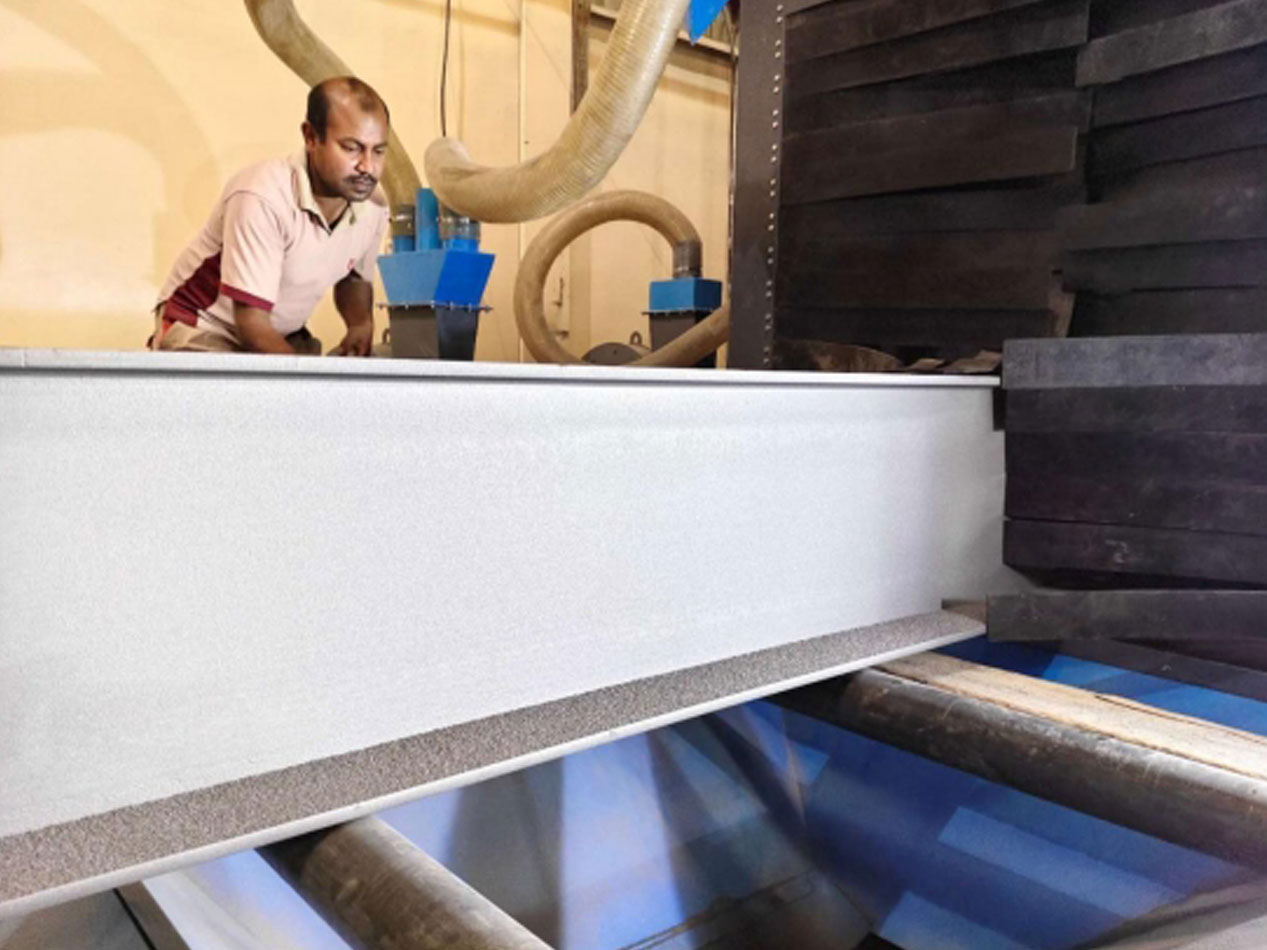
Specifically, tracked shot blasting machines are suitable for batch processing of small castings, forgings, and standard parts; hook-type shot blasting machines are suitable for processing complex workpieces such as engine blocks, gears, and wheel hubs; and roller conveyor shot blasting machines are suitable for continuous processing of long materials such as steel plates and structural steel.
Workpieces treated with shot blasting exhibit a uniform metallic luster and good surface roughness consistency. More importantly, shot blasting can increase the fatigue life of workpieces several times, which is something sandblasting cannot replace.
2. What workpieces are suitable for sandblasting?
Sandblasting machines offer greater flexibility and are particularly suitable for handling the following situations: workpieces with complex shapes, internal cavities, or dead corners; localized repair and cleaning of large structural components; workpieces such as stainless steel and aluminum alloys that are susceptible to iron contamination (requiring the use of stainless steel shot or glass beads); and pre-painting preparation requiring precise control of surface roughness.
Sandblasting also creates a good surface roughness to enhance coating adhesion, but it does not change the mechanical properties of the metal.
3. Comparison of Treatment Effects
In terms of surface cleanliness, shot blasting typically achieves Sa2.5 to Sa3, while sandblasting generally achieves Sa2 to Sa2.5. Regarding surface roughness, shot blasting creates more uniform and deeper anchor patterns, while sandblasting offers a wider controllable range, allowing for both coarse and fine textures. In terms of strengthening effect, shot blasting can generate a compressive stress layer to improve fatigue strength, while sandblasting does not have this function. For thin-walled parts, shot blasting may cause deformation, while sandblasting is relatively safer.
Equipment selection should not only consider the purchase price but also the long-term operating costs.
1. Equipment Investment and Operating Costs
The initial investment for shot blasting machines is usually high, especially for large equipment such as roller conveyor types. However, its operating costs are relatively low: metal abrasives such as steel shot and steel grit can be recycled thousands of times; it has a high degree of automation and low labor costs; it is suitable for large-scale continuous production, with low unit processing costs.
The initial investment for a sandblasting machine is relatively low; a manual electrostatic sandblasting machine can be started with just a few thousand yuan. However, long-term operating costs need to be considered: abrasive consumption is rapid, and quartz sand and brown corundum are mostly single-use; manual operation is intensive, resulting in relatively low efficiency; dust control requirements are high, and investment in dust removal equipment cannot be ignored.
2. Environmental Protection and Safety
Modern shot blasting machines are mostly enclosed designs, equipped with efficient dust removal systems, resulting in good dust control and a clean workshop environment. Although the noise is high, it can be controlled through sound insulation measures.
Sandblasting operations (especially dry blasting) produce a lot of dust, requiring higher standards for the operating environment and environmental protection facilities. Open-type sandblasting requires strict protective measures and dust removal equipment. Wet sandblasting produces less dust but generates wastewater treatment issues.
3. How to Choose Based on Budget?
If your budget is sufficient, you prioritize minimizing long-term operating costs, and your workpieces are suitable for batch processing, a shot blasting machine is a more economical choice. If your initial investment is limited, you have a wide variety of workpieces with complex shapes, and small batch sizes, a sandblasting machine offers greater flexibility.
There is no standard answer to this question. The key is to answer the following questions:
1. What are your workpieces?
If the workpieces are small, produced in large batches, and not susceptible to impact, prioritize a tracked shot blasting machine. If the workpieces are medium to large, have complex shapes, and are susceptible to impact, prioritize a hook-type shot blasting machine. If they are long plates, structural steel, or steel structures, prioritize a roller conveyor type shot blasting machine. If the workpieces are highly irregular in shape, require localized repairs, or are for small-batch production, then a sandblasting machine should be considered.
2. What are your process objectives?
If only surface cleaning and roughening are required, either method is acceptable, but the choice should be made based on other factors. If improving the fatigue strength of the workpiece is necessary, shot blasting must be used for shot blasting strengthening.
3. What is your production scale?
For large-volume continuous production, shot blasting machines offer significant efficiency advantages. For small-batch, multi-variety production, sandblasting machines offer greater flexibility.
4. What are your site and budget conditions?
If factory space is limited and the budget is low, you can start with a sandblasting machine. If you have access to a pit and are looking for long-term benefits, investing in a shot blasting machine is more cost-effective.
Last year, a factory that manufactures automotive gears approached us. They were originally using sandblasting to clean the oxide scale on the gear surfaces, which was effective, but the gears frequently experienced early fatigue fractures during use.
Our engineers recommended that they switch to a hook-type shot blasting machine for shot blasting strengthening. The same workpiece, after shot blasting, not only had its oxide scale removed more effectively, but a compressive stress layer was also formed at the tooth root. Six months later, the customer reported that the fatigue life of the gears had increased nearly threefold, and premature fracture had not recurred.
This case illustrates that choosing the right process not only improves surface quality but also fundamentally enhances product performance.
Shot blasting and sandblasting each have their advantages; there is no absolute "better" or "worse," only "more suitable."
The core value of a shot blasting machine lies in its high efficiency, ability to strengthen components, and suitability for mass production. If you are dealing with large batches of workpieces or need to improve the fatigue strength of parts, shot blasting is a better choice.
The core value of a sandblasting machine lies in its high flexibility, low investment threshold, and adaptability to complex shapes.If you have a variety of workpieces, complex shapes, small batches, or only occasionally require surface treatment, sandblasting offers better value for money.
If you are still unsure, the simplest way is to send us a sample of your workpiece. We can treat it using both processes separately, allowing you to see the difference in effect firsthand and then make a decision based on the actual results.
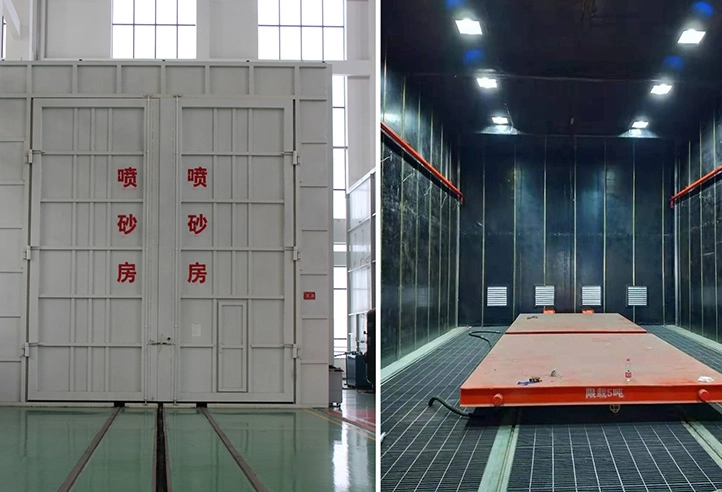
Founded in 2010, Qingdao Zhiling Machinery Equipment Co., Ltd. is a high-tech enterprise integrating R&D, manufacturing, and sales. The company's main products include shot blasting machines, sandblasting machines, sandblasting rooms, and CNC turret punch presses. It holds CE and ISO certifications, and its products are exported to over 105 countries and regions worldwide. We offer free process testing and solution design services. Please contact us for more information.