English

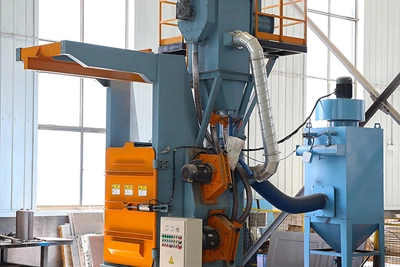
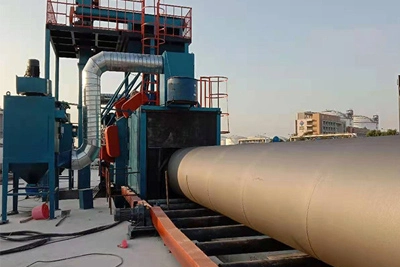
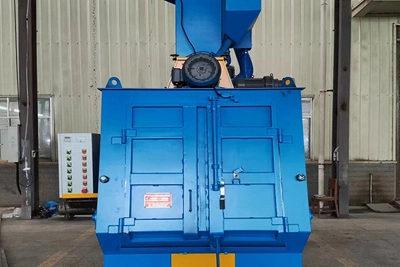

If the shot blasting machine exceeds the warranty period, we will still provide users with timely and free online consultation and answers, regular follow-up visits, and engineers will regularly visit the user's site for guidance and monitoring.
Shot blasting machines are primarily designed for metal surfaces. For non-metal materials, the process needs careful adjustment or alternative surface treatment methods should be considered.
The blasting turbine is the core component responsible for accelerating abrasives to high speed. Its performance directly affects cleaning efficiency, coverage, and overall machine productivity.
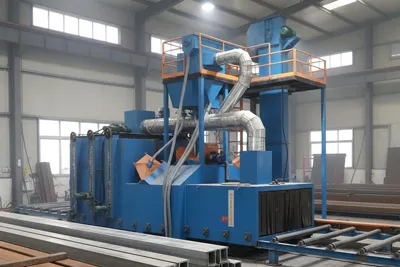
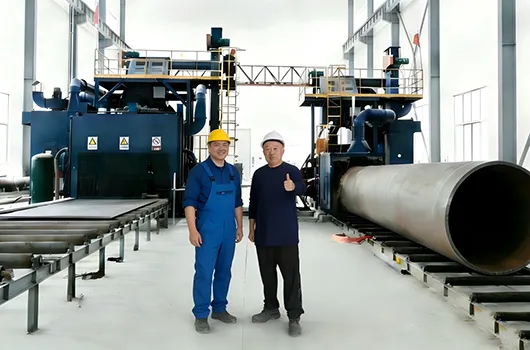
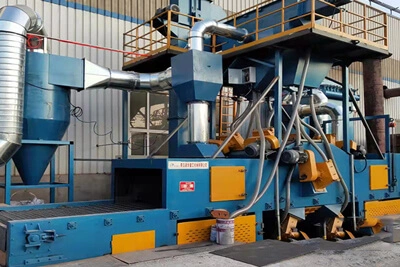
The h beam shot blasting machine is suitable for surface rust removal and painting processes of steel plates, profiles, and structural components in industries such as shipbuilding, automobiles, locomotives, bridges, and machinery.
The simplest basis is the size of the work piece to be processed, and the most direct and simple way is for you to contact our professional sales team for one-on-one service and develop a plan.
The one-time cleaning time of the shot blasting machine is 15-25 minutes. The sales team and design team will add auxiliary tools according to the actual size and shape of the work piece to accommodate more work pieces.
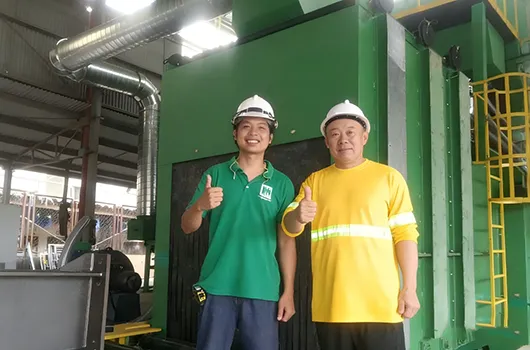
We are equipped with professional machine operation manuals and troubleshooting manuals. Our engineers will provide on-site training and guidance to users, and our after-sales team is available 24 hours a day to answer questions. If the user still cannot solve the problem, we will dispatch experts to the site.
We guide and train users to operate and maintain machines correctly. As long as improper operation, malignant damage, and other adverse conditions are excluded, the lifespan of the shot blasting machine is usually 5-10 years.
Normally, roller shot blasting machines require the construction of deep foundation pits. The engineer provides a detailed preparation manual for the shot blasting machine purchased by the user, including foundation, power and electrical aspects.
The shot blasting machine has a reasonable structure and undergoes three rounds of safety and quality testing before leaving the factory. It is equipped with a PLC intelligent control system, fault monitoring intelligent equipment, and emergency stop function. Engineers provide professional training to users on correct operation. All components of the shot blasting machine are covered with protective functions for the operator.
Shot blasting uses a mechanical wheel to accelerate steel shots onto the surface, while sandblasting relies on compressed air to propel abrasives. Shot blasting is more suitable for large-scale and high-efficiency industrial cleaning, whereas sandblasting is often used for finer or more flexible surface treatment.
Common abrasives include steel shot, steel grit, stainless steel shot, and sometimes cut wire shot. The selection depends on the required surface finish, hardness of the workpiece, and the cleaning purpose.
Routine inspection is recommended on a weekly basis, focusing on wear parts such as blades and liners. A more comprehensive maintenance check should be carried out every 3 to 6 months depending on usage frequency.
Yes, most shot blasting machines can be customized based on workpiece size, weight, shape, and production requirements. This includes chamber size, conveyor type, and blasting intensity.
Power consumption depends on the model, number of blasting turbines, and production capacity. Larger machines used for steel plates or structures typically require higher power input.
Dust control is essential. A properly designed dust collection system improves working conditions, protects operators, and ensures compliance with environmental regulations.
A sandblasting room is designed for manual or semi-automatic surface treatment of large or irregular workpieces. It allows operators to control the blasting process more precisely.
Shot blasting machines are suitable for mass production and standardized workpieces. Sandblasting rooms are more flexible and better suited for oversized or complex components.
Installation time varies depending on the equipment size and site conditions. Generally, it takes 7–20 days, including assembly, testing, and commissioning.
Operators should wear protective equipment such as helmets, gloves, and suits. Proper ventilation, dust extraction systems, and safety interlocks are necessary to ensure safe operation.
Yes, existing machines can be upgraded by replacing blasting turbines, improving dust collectors, or updating control systems to enhance performance and efficiency.
Production time usually ranges from 20 to 45 days depending on machine type and customization requirements.
Efficiency can be improved by optimizing abrasive flow rate, adjusting conveyor speed, maintaining equipment regularly, and selecting the correct machine configuration.
Key factors include manufacturing experience, customization capability, quality control standards, after-sales service, and availability of spare parts.
Steel shot has a spherical shape and is mainly used for peening and smoothing surfaces, while steel grit has angular edges and is more suitable for aggressive cleaning and removing heavy rust or scale.
Regular inspection, timely replacement of wear parts, proper abrasive selection, and correct machine operation can significantly extend the service life of key components.
The recycling system collects used abrasives, separates impurities, and reintroduces qualified media back into the blasting process, reducing operating costs and maintaining stable performance.
Operator training is essential to ensure safe operation, proper parameter adjustment, and efficient use of the equipment, which directly affects productivity and equipment lifespan.
The ideal surface should be clean, evenly treated, and free of visible rust, scale, or contaminants, with a consistent roughness suitable for coating or further processing.
Proper sealing design, regular inspection of wear-resistant liners, and timely replacement of sealing components help prevent abrasive leakage during operation.
Common types include roller conveyor machines, hanger type machines, tumble belt machines, rotary table machines, and through-feed systems, each suited for different applications.
Yes, shot blasting creates a uniform surface roughness that enhances the bonding strength between the substrate and coatings such as paint or anti-corrosion layers.
Noise levels vary depending on the machine type and configuration. Modern equipment is designed with noise reduction measures, but protective measures are still recommended.
The abrasive size should be selected based on the material, thickness, and required surface finish. Larger abrasives provide stronger impact, while smaller ones produce finer finishes.
Automatic systems offer higher efficiency and consistency for mass production, while manual systems provide flexibility for irregular or large workpieces.
Proper arrangement of blasting turbines, correct workpiece positioning, and stable conveyor speed help achieve uniform surface treatment.
The dust collector removes airborne particles generated during blasting, improving visibility, protecting equipment, and ensuring environmental compliance.